Looking to add style and extra storage to your kitchen without taking up precious space? Floating shelves are the perfect solution.
They give your kitchen a modern, clean look while keeping your favorite items within easy reach. If you’ve ever thought about making your own floating shelves but didn’t know where to start, this guide is made just for you. You’ll discover simple, step-by-step instructions that anyone can follow—no special skills needed.
By the end, you’ll have beautiful, sturdy shelves that you built yourself, transforming your kitchen and impressing everyone who visits. Ready to get started? Let’s dive in!
Credit: crystelmontenegrohome.com
Materials Needed
Choosing the right wood typeis key for sturdy floating shelves. Common options include:
- Pine:Affordable and easy to work with.
- Oak:Strong and has a nice grain pattern.
- Maple:Durable with a smooth finish.
- Walnut:Dark and elegant look.
Hardware and tools needed:
- Brackets:Hidden supports for floating effect.
- Screws and anchors:To secure shelves to walls.
- Drill:For making holes.
- Level:Ensures shelves are straight.
- Measuring tape:For accurate sizing.
- Screwdriver:To tighten screws.
Finishing supplies improve shelf looks and protect wood. Use:
- Sandpaper:Smooths rough edges.
- Wood stain or paint:Adds color.
- Clear sealant or varnish:Protects against moisture.
- Brushes or rags:For applying finishes.
Design Planning
Choose a shelf size that fits your kitchen space well. Narrow shelves suit small spaces, while wider ones offer more storage. Think about the weight you want the shelves to hold. Stronger brackets work better for heavy items.
Select a style that matches your kitchen decor. Floating shelves come in wood, metal, or glass. Wood adds warmth, metal gives a modern look, and glass feels light and open. Pick a style that blends with your cabinets and walls.
| Kitchen Space | Recommended Shelf Size |
|---|---|
| Small (under 5 ft) | 8-12 inches deep, 12-24 inches long |
| Medium (5-8 ft) | 10-14 inches deep, 24-36 inches long |
| Large (over 8 ft) | 12-16 inches deep, 36-48 inches long |
Measure the space carefully before buying materials. Check for any obstructions like switches or vents. Mark where the shelves will go to avoid mistakes.
Preparing The Wood
Start by measuring the shelf size you want. Cut the wood carefully using a saw. Make sure edges are straight and smooth for a neat look.
Use sandpaper to smooth all surfaces. Sand along the grain for best results. This step removes rough spots and splinters, making the shelf safe to touch.
Apply a finish to protect the wood. Choose from paint, stain, or clear varnish. Let each coat dry before adding another for a smooth finish. This step also enhances the wood’s color and texture.
Credit: crystelmontenegrohome.com
Installing Brackets
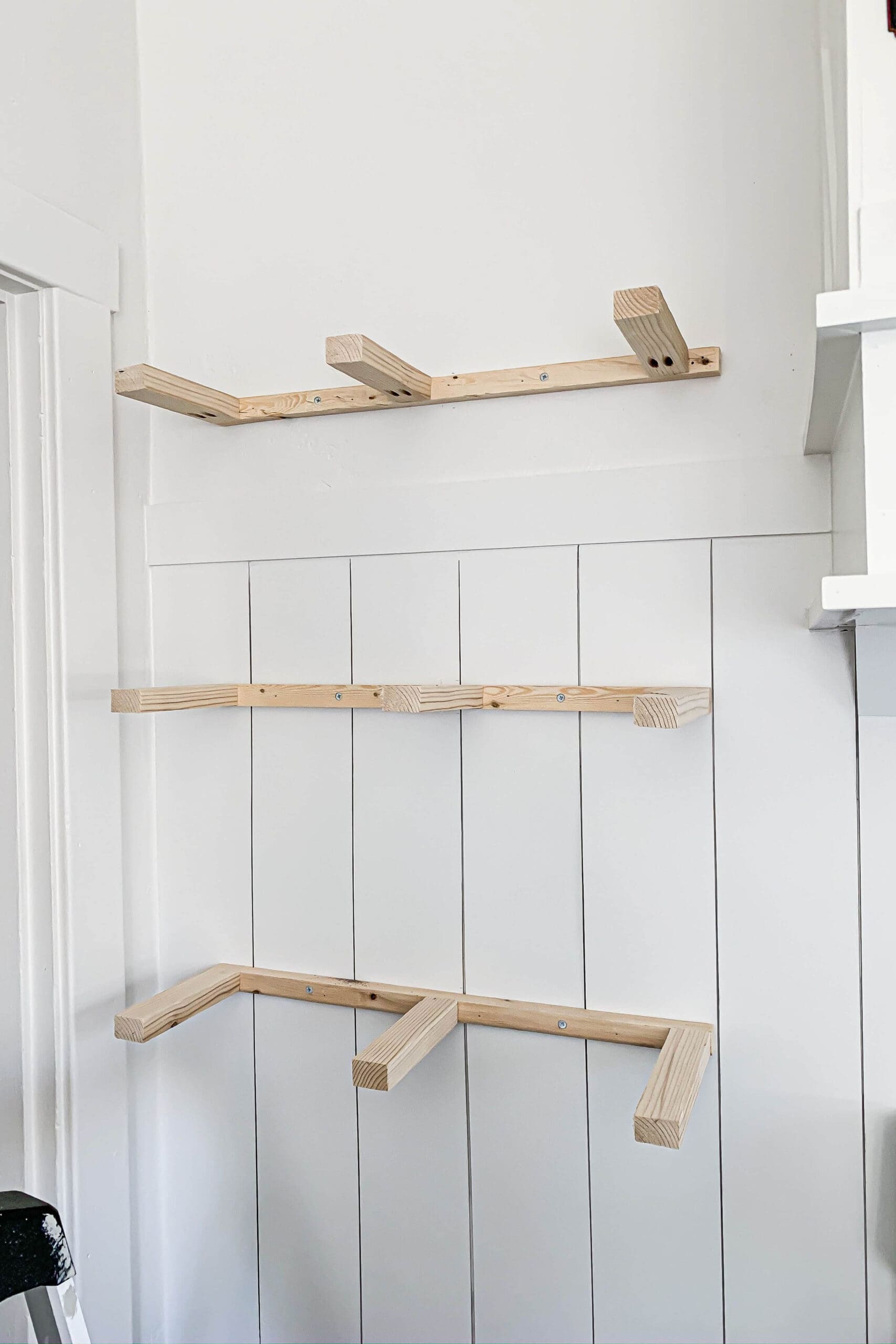
Start by locating the studsinside the kitchen wall. Use a stud finderfor better accuracy. Mark the spots where the studs are found with a pencil. This ensures the shelves will hold weight safely.
Next, mark the drill pointson the wall. Align the bracket holes with the stud marks. Use a level to keep marks straightand even. This step helps the shelves stay balanced.
Attach the brackets by drilling screws into the marked points. Use strong screwsthat fit the brackets and wall type. Tighten screws to keep the brackets firm. Check that brackets do not move before placing shelves.
Mounting The Shelves
Start by holding the shelf against the wall. Use a level to make sure it is straight. Mark the spots where the brackets will go. Keep the marks even for a neat look.
Attach the shelf to the brackets using screws. Use a drill or screwdriver for this step. Tighten the screws well to keep the shelf secure. Avoid over-tightening to prevent damage.
Check the shelf for stability. Gently press down and side to side. The shelf should not wobble or move. If it does, tighten the screws again or adjust the brackets. Safe and stable shelves hold kitchen items well.

Credit: www.youtube.com
Styling Tips
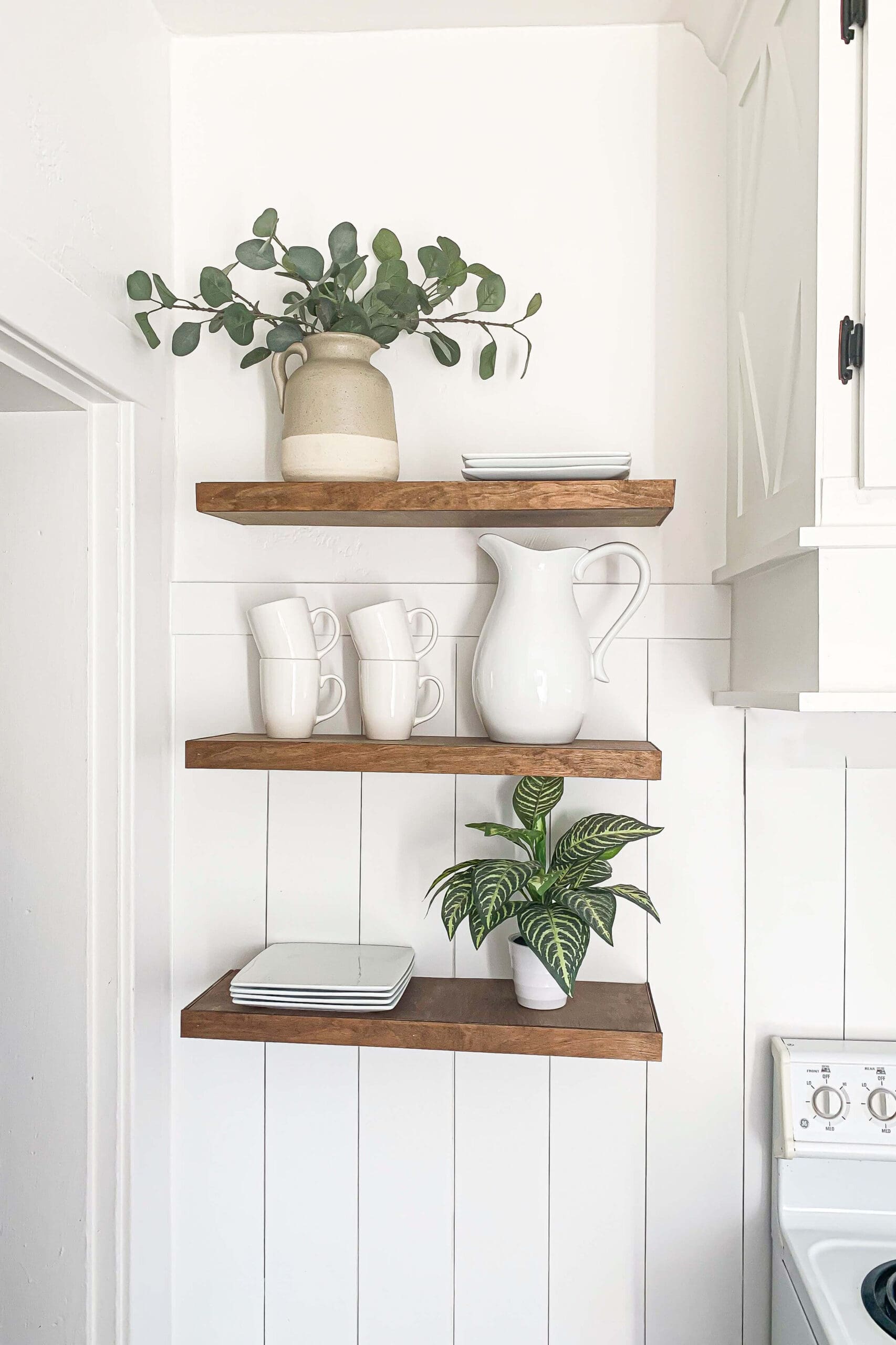
Arrange kitchen items by grouping similar things together. Store spices, jars, and cups neatly for easy reach. Use small baskets or containers to keep items tidy. Display colorful dishes or glassware for a fresh look.
Decorate shelves with small plants or herbs to add life. Place a few cookbooks or unique kitchen tools as accents. Keep decorations balanced and avoid overcrowding shelves to maintain a clean look.
Clean shelves regularly using a soft cloth and mild cleaner. Check brackets and screws to ensure shelves stay strong. Avoid placing heavy items that may cause shelves to bend or fall.
Frequently Asked Questions
What Tools Are Needed To Make Kitchen Floating Shelves?
You need a drill, level, stud finder, screws, brackets, saw, measuring tape, and sandpaper. These tools ensure accurate cuts and secure mounting for sturdy shelves.
How Do I Choose The Best Wood For Floating Shelves?
Select hardwood like oak or maple for durability. Plywood or pine also works well for budget-friendly options. Choose wood that matches your kitchen decor.
How Do I Securely Mount Floating Shelves In A Kitchen?
Locate wall studs with a stud finder. Use heavy-duty brackets and screws to anchor shelves firmly. Proper mounting prevents shelves from sagging or falling.
Can Floating Shelves Hold Heavy Kitchen Items Safely?
Yes, if properly installed on wall studs. Use strong brackets and quality wood. Avoid overloading beyond recommended weight limits for safety.
Conclusion
Floating shelves bring style and function to any kitchen space. They are easy to make with basic tools and materials. Follow the steps carefully, and take your time for best results. These shelves help organize your kitchen and show off your favorite items.
Try making them yourself to add a personal touch. Your kitchen will look neat and feel cozy with floating shelves. Simple, useful, and stylish—what more could you want?