Are you planning to replace or upgrade your kitchen faucet but unsure how to get the right fit? Measuring your kitchen faucet correctly is the first step to avoid costly mistakes and frustrating returns.
In this guide, you’ll learn simple, step-by-step methods to measure every part of your faucet with confidence. By the end, you’ll know exactly what size and type you need, making your kitchen upgrade smooth and hassle-free. Keep reading to discover easy tips that save you time and money!
Tools Needed
To measure a kitchen faucet correctly, gather these essential tools:
- Tape measure:for accurate length and height readings.
- Adjustable wrench:to loosen or tighten fittings if needed.
- Bucket or bowl:to catch water during removal or testing.
- Flashlight:to see under the sink or in dark spaces.
- Notepad and pen:to write down measurements clearly.
Having these tools ready makes the process smooth and efficient.
Identify Faucet Type
Start by checking the number of handleson your faucet. Common types include:
- Single-handle: One lever controls both hot and cold water.
- Double-handle: Separate handles for hot and cold water.
- Pull-out or pull-down: Faucet spout can be pulled for flexible use.
- Wall-mounted: Faucet attached to the wall, not the sink.
Notice the mounting style. Count the holes on the sink or countertop. Most kitchen faucets fit three or four holes.
Check the spout heightand reach. This affects how water flows into the sink and space for washing.
Measure Faucet Height
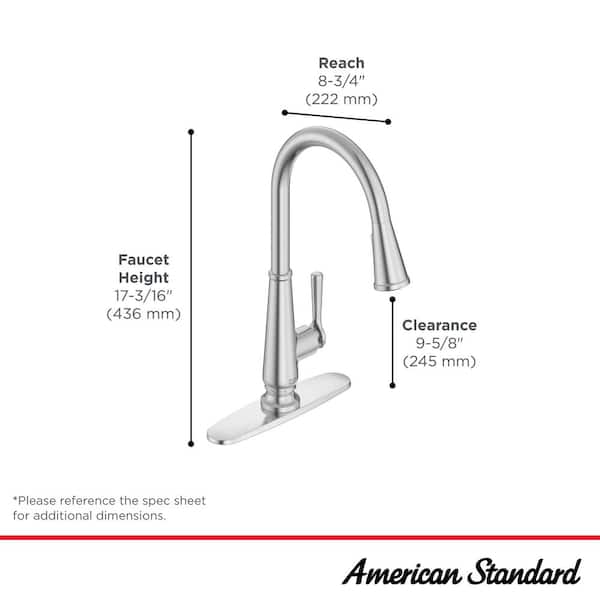
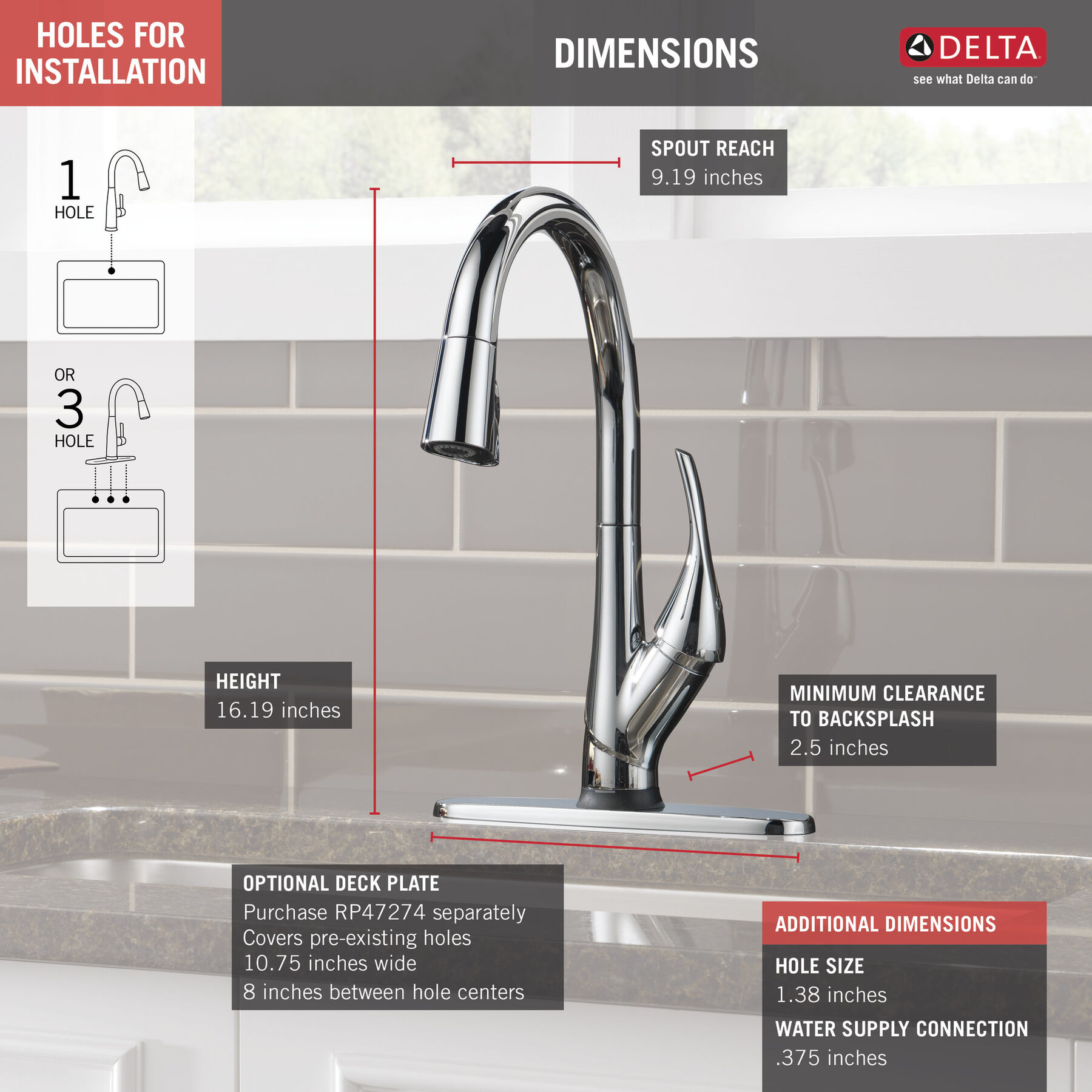
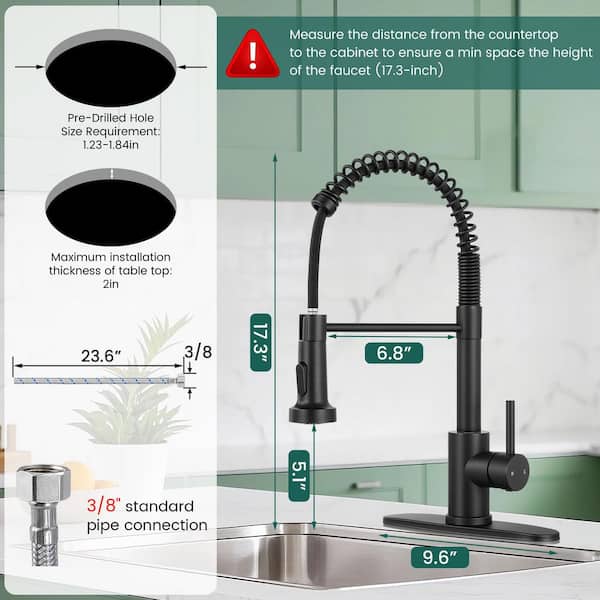
Measure the faucet height from the base to the highest point. Use a tape measure or ruler for accuracy. Make sure the faucet is installed or placed upright. This height helps to check if the faucet fits under cabinets or shelves.
Also, measure the distance from the countertop to the spout. This shows how much space is available for washing. Knowing these measurements avoids buying a faucet that is too tall or short.
- Place the measuring tool at the base of the faucet.
- Extend it straight up to the tallest part.
- Record this number in inches or centimeters.
- Measure from countertop to spout for clearance.
Credit: www.deltafaucet.com
Measure Spout Reach
Spout reach means how far the faucet’s spout goes over the sink.
Measure from the faucet base to the spout’s tip in a straight line.
This helps to know if water will fall in the sink or outside.
Use a tape measure or ruler for accuracy.
Check if the reach fits your sink size and shape.
Too short or too long reach may cause water splashing.
Good measurement means better comfort and less mess.
Measure Spout Height
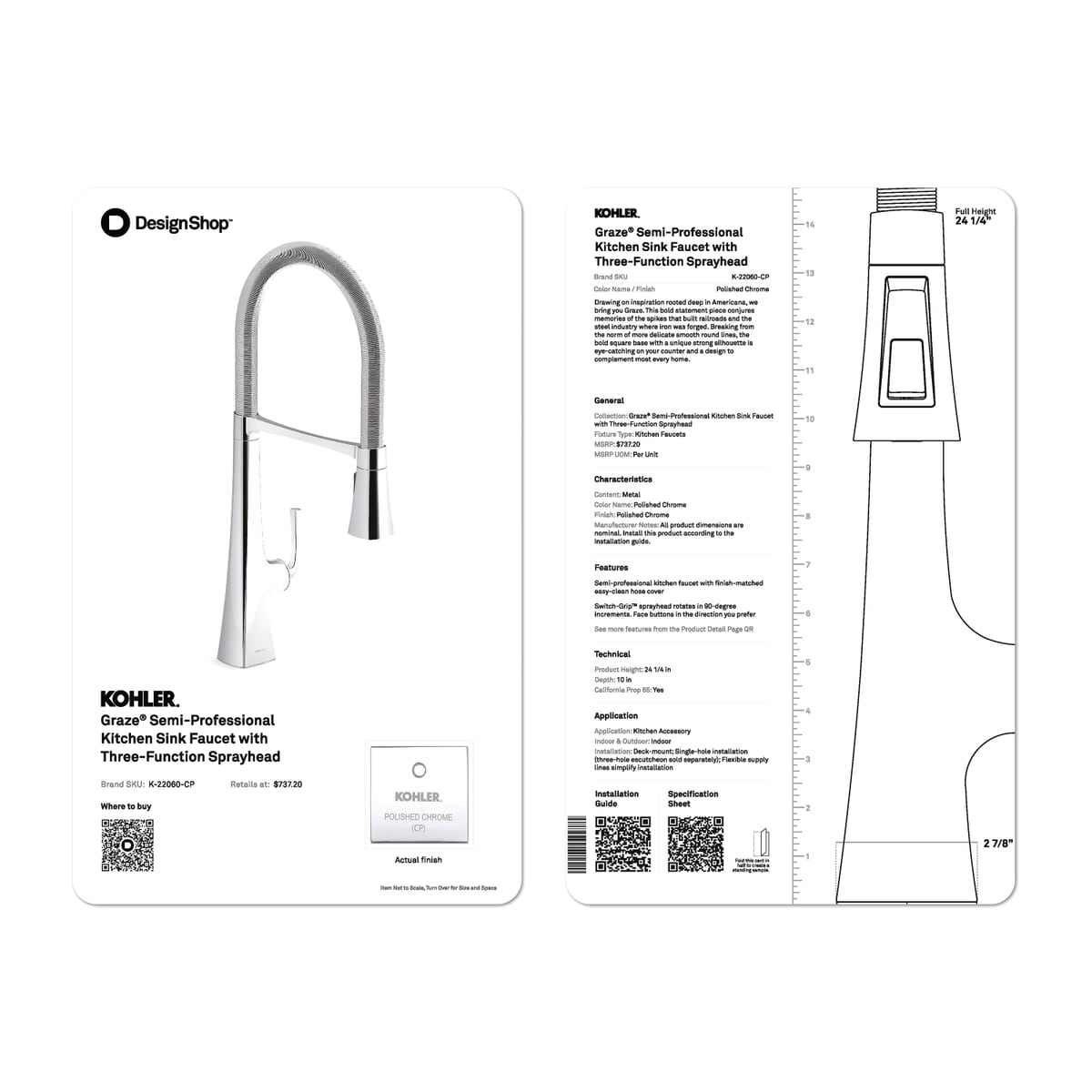
Spout height means the distance from the base of the faucet to the highest point of the spout. This measurement helps find a faucet that fits your sink well. Use a tape measure or ruler for accuracy.
Place the measuring tool at the base where the faucet sits on the countertop. Measure straight up to the top of the spout, not the handle. This height affects how much space you have for washing dishes or filling pots.
Here are quick tips:
- Measure in inches or centimeters, depending on your preference.
- Check if the spout height fits under cabinets or shelves.
- Remember that taller spouts give more clearance but may splash water.
Credit: www.designshop.com
Check Mounting Holes
Count the number of holeson your sink or countertop. Most kitchen faucets need either one, two, or three holes. This count helps find the right faucet type.
Measure the distance between holesusing a tape measure. Measure from the center of one hole to the center of the next. This distance is important for fitting the faucet correctly.
| Number of Holes | Common Faucet Types |
|---|---|
| 1 | Single-hole faucet |
| 2 | Two-handle faucet or single handle with sprayer |
| 3 | Standard faucet with separate hot and cold handles |
Measure Handle Clearance
Start by checking the space around the faucet handle. Ensure there is enough room for the handle to move freely. Use a ruler or tape measure for accuracy. Measure the distance between the faucet base and the nearest wall or cabinet. Allow at least 3 inches of clearance.
If the handle hits anything, the faucet won’t work well. Double-check the space when installing new faucets. Proper clearance prevents damage and ensures smooth operation. Remember, handle movement should be easy and unobstructed. Confirm your measurements before finalizing any purchase.
Record Measurements Accurately
To measure a kitchen faucet, gather a tape measure. First, measure the faucet height. Start from the base to the tip. This tells you how tall the faucet stands. Next, measure the spout reach. Measure from the faucet’s center to the spout’s tip. This shows how far the water reaches. Check the width of the faucet base. Measure from one side to the other. This helps ensure a good fit.
Also, note the hole size. Measure the diameter of the faucet hole. This ensures the faucet fits well in the sink. Don’t forget the distance between holes. If there are multiple holes, measure between them. This helps with faucet alignment. Always write down each measurement. This keeps your records clear and accurate.
Credit: www.homedepot.com
Frequently Asked Questions
How Do I Measure Kitchen Faucet Height Correctly?
Measure from the base to the highest point of the faucet. Use a tape measure for accuracy. This helps ensure the faucet fits under cabinets and suits your sink.
What Is The Best Way To Measure Faucet Reach?
Measure from the center of the faucet base to the spout’s water outlet. This determines how far water will flow into the sink. It’s key for proper sink coverage.
How To Measure Kitchen Faucet Mounting Holes?
Count and measure the distance between faucet mounting holes on the sink or countertop. Use a ruler or tape for precise spacing. This ensures compatibility with your new faucet.
Why Measure Faucet Spout Height And Clearance?
Spout height affects sink usability and splash control. Measure clearance under cabinets to avoid obstructions. Proper measurement ensures comfortable use and prevents water damage.
Conclusion
Measuring your kitchen faucet helps you choose the right fit. Take your time to get accurate numbers. Check the height, spout reach, and mounting holes carefully. These details ensure your faucet works well with your sink. Simple tools like a tape measure work best.
Accurate measurements save you from costly mistakes. Now, you can shop with confidence and ease. A well-measured faucet makes your kitchen more functional. Keep these tips in mind for a smooth installation.