Have you ever wondered why your kitchen knives don’t cut as smoothly as they used to? The secret often lies in the angle at which they are sharpened.
Sharpening your knives at the right angle can make a huge difference in how easily and safely you slice through ingredients. But what angle should you actually use? Getting this wrong can dull your blades faster or even damage them.
Keep reading, and you’ll discover the perfect sharpening angle to keep your knives sharp, efficient, and ready for any cooking task.
Credit: www.insight-kitchenknife.com
Knife Edge Angles
The angle at which kitchen knives are sharpened affects their cutting abilityand durability. A smaller anglecreates a sharper edge but wears out faster. A larger anglemakes the blade stronger but less sharp.
Most kitchen knives have edge angles between 15° and 20°. Japanese knives often use a 15° anglefor precise cuts. Western knives usually have a 20° angleto handle tougher tasks.
| Knife Type | Recommended Angle | Effect |
|---|---|---|
| Japanese | 10° to 15° | Sharper but needs frequent sharpening |
| Western | 18° to 20° | Stronger edge, less sharp |
| Heavy-duty knives | 20° to 25° | Very durable, less sharp |
- Choose an angle based on knife use.
- Sharpen regularly to keep the edge sharp.
- Use proper tools for the chosen angle.

Credit: www.youtube.com
Common Angle Ranges
Kitchen knives usually have sharpening angles between 15° and 25°. A smaller angle, around 15°, creates a sharper edge. This is best for precision tasks like slicing vegetables or fish. A larger angle, near 20° to 25°, makes the edge stronger. It is good for heavy cutting or chopping meat and bones.
Asian knives often have a 15° angle. Western knives usually have 20° to 25° angles. Choosing the right angle depends on the knife type and use.
| Knife Type | Sharpening Angle | Use |
|---|---|---|
| Asian Knives | ~15° | Thin, precise cuts |
| Western Knives | 20° – 25° | Heavy chopping and cutting |
| Specialty Knives | Varies | Depends on task |
Factors Influencing Angle Choice
The choice of angle depends on the type of knifeand its use. A smaller angle, like 15 degrees, makes a sharper edge. This angle is best for thin, delicate knivesused for slicing vegetables or fish.
Larger angles, around 20 to 25 degrees, create a stronger edge. These are good for heavy-duty knivesused for chopping meat or bones. Thicker edges last longer but may not be as sharp.
The knife’s steel qualityalso matters. Harder steel can hold a sharper, thinner edge. Softer steel needs a wider angle to avoid damage.
- Smaller angle (15°): sharper but less durable
- Larger angle (20°-25°): stronger and lasts longer
- Knife use: slicing vs. chopping
- Steel hardness affects angle choice
Sharpening Tools And Techniques
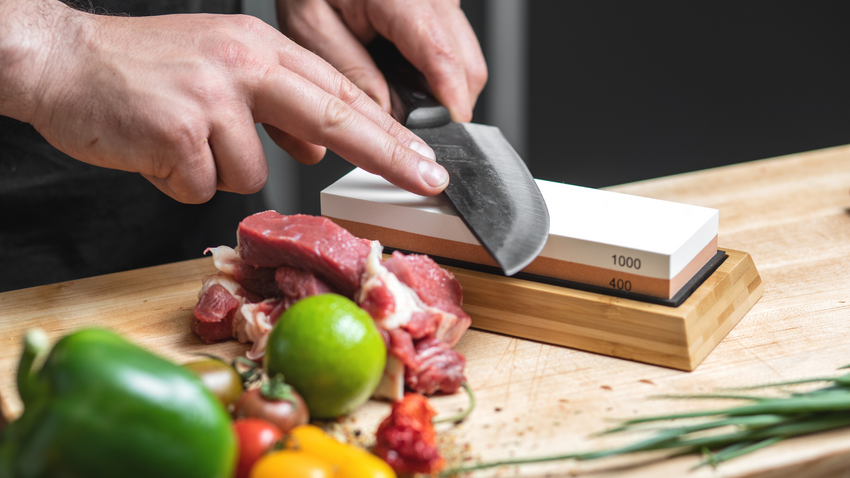
Kitchen knives need the right sharpening anglefor best results. Most kitchen knives sharpen between 15 and 20 degreesper side. A sharper angle means a finer edge but less durability. A wider angle makes the blade stronger but less sharp.
Common sharpening tools include:
- Whetstones: Offer control and smooth edges.
- Sharpening rods: Good for quick touch-ups.
- Electric sharpeners: Easy but can remove too much metal.
Using a consistent angleduring sharpening is key. You can use angle guides to keep it steady. Practice keeps the blade sharp and safe to use.
Maintaining Sharpness Over Time
Maintaining the sharpness of kitchen knives depends on the right sharpening angle. Most kitchen knives should be sharpened between 15 to 20 degreesper side. A smaller angle, like 15 degrees, makes the edge sharper but less durable. A larger angle, like 20 degrees, creates a stronger edge but less sharp.
Regular sharpening keeps the knife edge clean and precise. Using a honing rod often helps maintain the edge without removing much metal. Avoid pressing too hard during sharpening; gentle, consistent strokes work best.
- Use a sharpening stone or sharpener with a fixed angle.
- Keep the angle steady for even sharpening.
- Hone the knife between sharpenings to align the edge.
- Clean the blade after sharpening to remove metal particles.

Credit: www.reddit.com
Frequently Asked Questions
What Is The Best Angle To Sharpen Kitchen Knives?
Most kitchen knives sharpen well between 15 and 20 degrees per side. This angle balances sharpness and durability.
Why Does Knife Sharpening Angle Matter?
The angle affects how sharp and how long the edge lasts. A smaller angle is sharper but less strong.
Can I Sharpen All Kitchen Knives At One Angle?
No. Different knives need different angles. For example, Japanese knives use 15 degrees, while Western knives use 20 degrees.
Conclusion
Choosing the right angle keeps your kitchen knives sharp longer. A sharper knife cuts better and is safer to use. Thin angles work well for delicate tasks. Thicker angles hold up for heavy chopping. Regular sharpening helps maintain the edge.
Practice makes it easier to find the best angle. Keep your knives sharp for easier cooking every day.