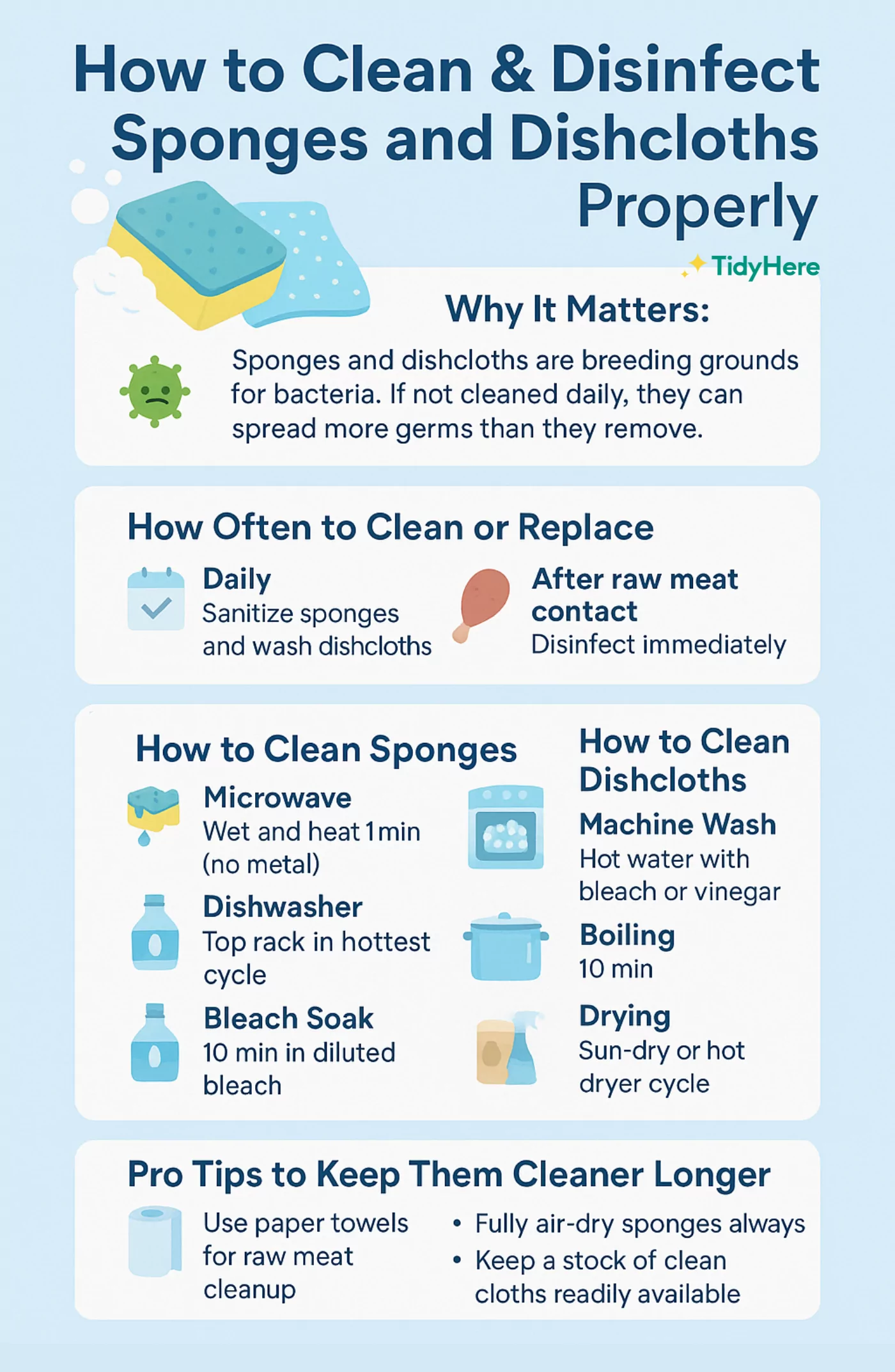
Your kitchen sponge is one of the dirtiest items in your home, even dirtier than your toilet! Every time you use it, germs and bacteria hide in its tiny holes, putting your health at risk.
But don’t worry—sanitizing your kitchen sponge is easier than you think. You’ll discover simple, effective ways to keep your sponge clean and safe, protecting you and your family from harmful germs. Keep reading to learn how a small change can make a big difference in your kitchen hygiene.

Credit: tidyhere.com
Why Sanitize Kitchen Sponges
Kitchen spongescan hold millions of germs. These germs grow fast because sponges stay wet and warm. Using a dirty sponge spreads bacteria on dishes and surfaces. This can cause food poisoningand sickness. Sanitizing sponges kills these germs and makes the kitchen safer.
Cleaning sponges also helps them last longer. A fresh sponge works better to clean dishes and counters. It stops bad smells that come from old, dirty sponges.
- Bacteriahide in sponge holes.
- Wet sponges are perfect for germ growth.
- Sanitizing removes harmful germs.
- Cleaner sponges stop bad odors.
- Sanitizing helps keep your family healthy.
Common Germs In Sponges
Kitchen sponges often carry many germs. These can cause food poisoningand infections. Some common germs found in sponges include:
- E. coli– found from raw meat and can cause stomach illness.
- Salmonella– spreads from poultry and causes fever and diarrhea.
- Staphylococcus– lives on skin and causes infections.
- Campylobacter– causes diarrhea and comes from raw meat.
- Mold and Yeast– grow in damp sponges and can cause allergies.
Sponges stay wet and warm, which helps germs grow fast. Cleaning sponges often is very importantto keep kitchens safe.
Microwave Sanitizing Method
Wet the kitchen sponge fully before placing it in the microwave. This prevents the sponge from catching fire.
Heat the sponge on high power for 1 to 2 minutes. The microwave’s heat kills most bacteria and germs.
Be careful when removing the sponge. It will be very hot. Let it cool before use.
Do not microwave sponges with metallic parts. They can cause sparks and damage the microwave.
- Make sure the sponge is wet
- Microwave for 1-2 minutes on high
- Use microwave-safe sponges only
- Let the sponge cool before handling
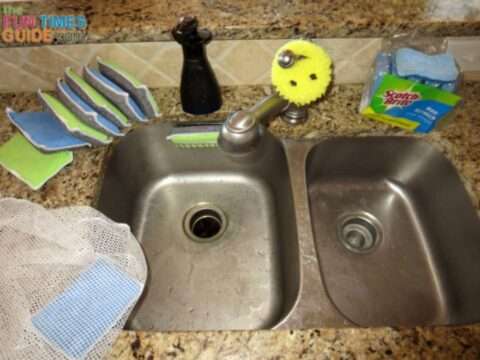
Credit: household-tips.thefuntimesguide.com
Dishwasher Cleaning Technique
Place the kitchen sponge on the top rack of the dishwasher. Use the hottest water setting available. Run the dishwasher through a full cycle with regular detergent. The heat and detergent help kill most germs and bacteria.
After the cycle, let the sponge dry completely before use. A wet sponge can grow new bacteria quickly. Repeat this cleaning every few days to keep the sponge fresh and safe.
Using Vinegar And Bleach Solutions
Vinegar kills many germs on kitchen sponges. Soak the sponge in a bowl filled with white vinegarfor at least 5 minutes. Then rinse it well with warm water. This method is safeand natural.
Bleach is stronger and kills almost all bacteria. Mix 3/4 cup of bleach in 1 gallon of water. Soak the sponge for 5 minutes. Be sure to rinse the sponge thoroughlyafter soaking. Use bleach only sometimes to avoid damage.
| Solution | How to Use | Time | Notes |
|---|---|---|---|
| White Vinegar | Soak sponge in vinegar | 5 minutes | Natural and safe |
| Bleach | Mix bleach with water, soak sponge | 5 minutes | Strong, rinse well |

Credit: currently.att.yahoo.com
Frequently Asked Questions
How Often Should I Sanitize My Kitchen Sponge?
Sanitize your kitchen sponge every 2 to 3 days to reduce germs and keep it clean.
What Is The Easiest Way To Sanitize A Kitchen Sponge?
Microwave the wet sponge for 1-2 minutes to kill most bacteria quickly and safely.
Can I Use Bleach To Sanitize My Kitchen Sponge?
Yes, soak the sponge in diluted bleach for 5 minutes to disinfect it well.
Conclusion
Sanitizing your kitchen sponge keeps your kitchen clean and safe. Regular cleaning stops germs from spreading on dishes and surfaces. Simple methods like microwaving or soaking in vinegar work well. Replace sponges often to avoid bacteria buildup. Clean sponges help your kitchen stay fresh and healthy.
Small efforts make a big difference in hygiene. Keep your sponge clean and enjoy a safer kitchen every day.