Thinking about changing your kitchen faucet but unsure how hard it really is? You might be worried about making a mess, dealing with confusing parts, or spending hours on the task.
The good news is, replacing a kitchen faucet is easier than you might think—and you don’t need to be a plumbing expert to do it. You’ll discover simple steps that anyone can follow, tips to avoid common mistakes, and how to save time and money by doing it yourself.
Ready to take control of your kitchen upgrade? Keep reading and find out how manageable this project can be.

Credit: www.reddit.com
Tools Needed
Changing a kitchen faucet needs some basic and optional tools. Having the right tools makes the job easier and quicker.
- Adjustable wrench:Used to loosen and tighten nuts.
- Basin wrench:Helps reach tight spaces under the sink.
- Screwdriver:Needed to remove screws from the faucet or handles.
- Plumber’s tape:Seals pipe threads to stop leaks.
- Bucket:Catches water when disconnecting pipes.
Optional tools can help but are not always needed.
- Flashlight:To see under the sink better.
- Pliers:For gripping and turning small parts.
- Putty knife:To remove old putty or sealant.
- Towel or rag:Cleans up spills and mess.
Preparation Steps
Shutting off the watersupply is the first task. Find the valves under the sink. Turn them clockwise to stop water flow. Check if water is off by turning the faucet handle.
Clearing under the sinkhelps create space to work. Remove cleaning items and buckets. This gives room to move and find parts easily.
Removing the old faucetneeds care. Use a wrench to loosen the nuts holding the faucet. Keep a towel handy to catch water drips. Take out the faucet once nuts are removed.
Installation Process
Changing a kitchen faucet is a straightforward task with basic tools. Most steps involve unscrewing old parts and fitting new ones carefully. Patience and attention to detail make the process much easier.
Positioning New Faucet
Place the faucet into the sink hole. Ensure it fits snugly. Align the faucet with the sink’s holes. Use a rubber gasket if needed. This helps prevent leaks. Make sure the faucet is straight.Connecting Water Lines
Attach the water supply lines. Use adjustable pliers for tightening. Connect the hot water line to the left. Connect the cold water line to the right. Ensure connections are secure. Turn on the water valves slowly. Check for leaks at each connection.Securing Faucet
Tighten the mounting nuts under the sink. Use a basin wrench for hard-to-reach areas. Make sure the faucet is stable. Avoid overtightening as it may cause damage. Double-check the faucet’s alignment. Test the faucet by turning it on. Ensure it works properly without leaks. `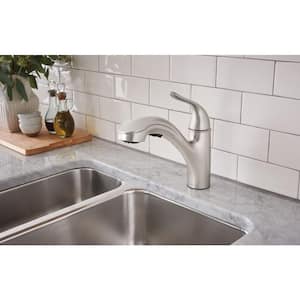
Credit: www.homedepot.com
Common Challenges
Tight spacesunder the sink make faucet changes tricky. Limited room can make it hard to reach nuts and bolts. Using a small wrench or flexible tools helps a lot. Sometimes, removing the cabinet door or items inside gives more space.
Old plumbing issuescan slow down the process. Pipes might be rusty or stuck, making removal tough. Older homes often have non-standard parts that don’t fit new faucets. Patience and gentle twisting prevent damage.
- Leak preventionis very important after installation.
- Always use plumber’s tape on threads to stop drips.
- Tighten connections but avoid over-tightening to prevent cracks.
- Check for leaks by running water and watching closely.
- Fix any leaks immediately to avoid water damage.
Time Commitment
Changing a kitchen faucet usually takes about 30 minutes to 1 hour. This time depends on how easy it is to reach the pipes and connections. Old or rusted parts may take longer to remove. Sometimes, the water supply must be turned off before starting, which adds a few minutes.
Several factors affect the time needed:
- Faucet type:Simple designs are quicker to install than complex ones.
- Tool availability:Having the right tools speeds up the work.
- Skill level:Experience can cut down the time a lot.
- Condition of plumbing:Old pipes or leaks may cause delays.
When To Hire A Professional
Complex plumbing can make faucet replacement difficult. Pipes may be hard to reach or old. Leaks can happen if connections are not tight. A professional has the right tools and skills to fix these problems quickly.
Lack of tools or experience can cause delays and damage. Special tools are needed to remove old faucets and tighten parts. Without experience, small mistakes can cause bigger issues. Hiring a pro saves time and avoids costly repairs.
Cost Considerations
Choosing between DIYand a professionalaffects the total cost. Doing it yourself saves money on labor but requires tools and time. Professionals charge for skills and experience, which can be worth it for complex jobs.
Other expenses may include:
- New partsif the faucet or pipes are old.
- Toolslike wrenches if you don’t have them.
- Plumber feesif extra work or repairs are needed.
- Disposal costsfor old faucets.
| Cost Type | DIY | Professional |
|---|---|---|
| Labor | Free (your time) | $50 – $150 per hour |
| Parts | $50 – $200 | $50 – $200 |
| Tools | May need to buy | Included |
| Extra Repairs | Out-of-pocket | Usually included |

Credit: www.youtube.com
Frequently Asked Questions
How Difficult Is Changing A Kitchen Faucet?
Changing a kitchen faucet is moderately easy for DIYers. Basic plumbing skills and tools are required. It typically takes 30 to 60 minutes. Following instructions carefully ensures a smooth process without leaks or damage.
What Tools Are Needed To Replace A Kitchen Faucet?
You need an adjustable wrench, basin wrench, screwdriver, plumber’s tape, and bucket. These tools help loosen old parts and secure the new faucet. Having these ready makes the replacement faster and more efficient.
Can I Change A Kitchen Faucet Without Shutting Off Water?
No, always turn off the water supply before replacing the faucet. This prevents leaks and water damage. Locate and close the shut-off valves under the sink to ensure safety during installation.
How Much Does It Cost To Replace A Kitchen Faucet?
The average cost ranges from $50 to $300 for the faucet. Additional costs may include tools or professional help. DIY replacement saves labor fees, making it more affordable overall.
Conclusion
Changing a kitchen faucet is not as hard as it seems. With basic tools and some patience, anyone can do it. The key is to follow clear steps and take your time. Small leaks or loose parts can cause trouble if ignored.
A new faucet can improve your kitchen’s look and function. This task saves money compared to hiring a plumber. Remember, careful work leads to good results. So, don’t worry—give it a try and enjoy your updated kitchen.