The world of kitchen knives is vast, but for cutting raw chicken breast, a few key types stand out for their suitability, efficiency, and safety. While many knives can “get the job done,” selecting the right one transforms a chore into a seamless culinary experience. Understanding the distinctions between these categories will empower you to choose a knife that perfectly matches your needs and cutting style.
The Chef’s Knife, often referred to as a Gyuto in Japanese cutlery, is the quintessential all-rounder in any kitchen. Typically ranging from 8 to 12 inches (20 to 30 cm) in length, its broad, curved blade allows for a rocking motion ideal for chopping and mincing, while its straight mid-section is perfect for push cuts. For raw chicken breast, a sharp chef’s knife excels at breaking down larger pieces, slicing into cutlets, or dicing for recipes. Its weight and balance provide excellent leverage and stability, which is crucial when dealing with slippery raw meat. The robustness of a good chef’s knife also means it can handle light bone contact if you’re working near small bones, though it’s not designed for heavy butchering. For home cooks who want one knife that can do most things, a chef’s knife is often the first and best choice for chicken breast.
Next, we have the Santoku Knife, a Japanese-style all-purpose kitchen knife, whose name means “three virtues” (meat, fish, and vegetables). Characterized by a straighter edge and a “sheep’s foot” tip (a blunt, downward-curving tip), Santokus typically range from 5 to 7 inches (13 to 18 cm). Its flatter profile makes it ideal for an up-and-down chopping motion rather than the rocking motion of a chef’s knife. Many Santoku knives feature a Granton edge (indentations along the blade) which creates air pockets, preventing sticky foods like raw chicken breast from adhering to the blade. For precision dicing, slicing thin strips for stir-fries, or creating uniform cutlets, a Santoku offers superior control and a clean, efficient cut. It’s often favored by those who prefer a lighter, more agile knife for fine detail work on boneless meats.
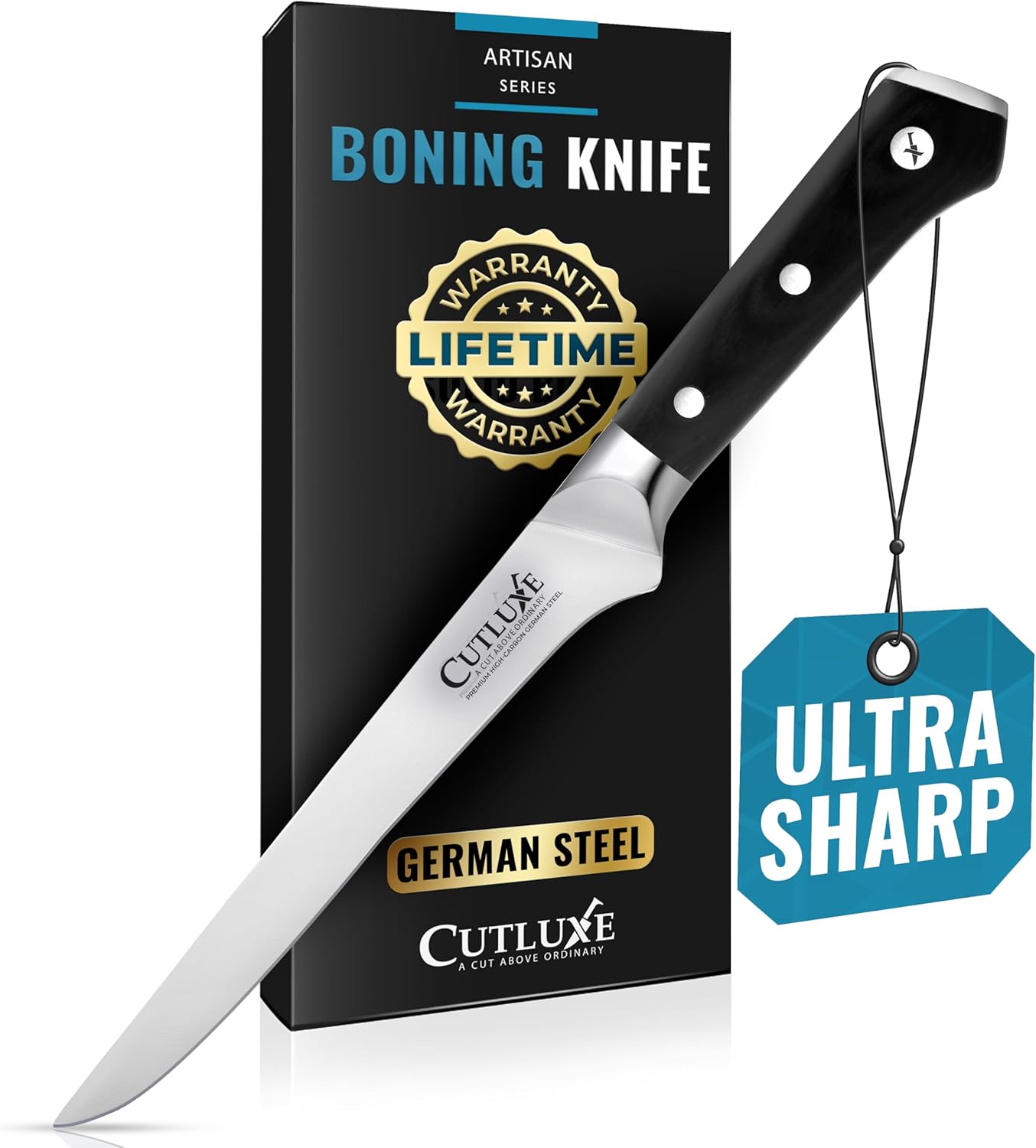
The Boning Knife is a specialist, designed specifically for separating meat from bone, trimming fat, and filleting. These knives typically have thin, flexible blades ranging from 5 to 6.5 inches (13 to 17 cm), though stiff-bladed versions exist. For raw chicken breast, a boning knife truly shines when you need to remove tenderloins, butterfly breasts, or trim excess fat with surgical precision. Its slender profile and often pointed tip allow it to navigate tight spaces and make delicate, controlled cuts without tearing the meat. While not an all-rounder for general prep, if your primary task is breaking down whole chickens or meticulously preparing boneless breasts for specific recipes (e.g., stuffed chicken breast), a boning knife is an invaluable tool that offers unmatched efficiency and minimizes waste.
Lastly, the Utility Knife serves as a smaller, more nimble cousin to the chef’s knife. With blades typically between 4 to 7 inches (10 to 18 cm), it’s perfect for tasks where a chef’s knife might feel too large or cumbersome. For raw chicken breast, a utility knife is excellent for smaller portions, trimming irregularities, halving breasts, or performing quick, precise slicing. Its size makes it easy to handle for those with smaller hands or for tasks requiring greater dexterity. While it won’t replace a chef’s knife for heavy-duty work, its convenience and precision for lighter chicken breast prep make it a worthy addition to any kitchen.
Ultimately, the “best” type of knife depends on your specific cooking habits and the typical preparation required for chicken breast in your kitchen. Many home cooks find a high-quality chef’s knife or Santoku to be perfectly sufficient, covering most raw chicken breast cutting needs with ease. However, for those who regularly engage in more intricate preparation, a dedicated boning knife can elevate the experience significantly.
Common Buying Mistakes to Avoid

Navigating the vast world of kitchen knives can be daunting, and it’s easy to fall prey to common pitfalls that can lead to frustration, subpar performance, or even safety hazards. When investing in a knife for cutting raw chicken breast, being aware of these mistakes will help you make a smarter, more satisfying purchase.
❌ Mistake: Prioritizing Aesthetics Over Functionality
Why it’s bad: Many knives are designed to look impressive, with ornate handles, intricate blade patterns, or flashy finishes. However, a visually stunning knife may conceal poor blade geometry, unbalanced weight, or an uncomfortable handle. Raw chicken breast requires a knife that prioritizes a razor-sharp edge, comfortable grip, and hygienic materials.
What to do instead: Focus on the blade material, edge retention, handle ergonomics, and overall balance. A plain-looking knife with superior performance will always be more valuable in the kitchen than a showpiece that struggles with basic tasks. Read reviews that discuss performance and user experience, not just appearance.
❌ Mistake: Neglecting Handle Comfort and Grip
Why it’s bad: When cutting raw chicken breast, your hands can become slippery from moisture or fat. A handle that doesn’t provide a secure, comfortable grip can lead to hand fatigue, loss of control, and increased risk of accidents. An ill-fitting handle also makes precision cutting difficult, resulting in ragged or uneven cuts.
What to do instead: Always prioritize a handle that feels secure and comfortable in your hand. Look for materials that offer good traction, even when wet, such as textured synthetic compounds or well-treated wood that isn’t overly polished. If possible, try holding the knife before buying to assess its fit and feel. Consider the size of your hand relative to the handle.
❌ Mistake: Assuming a High Price Guarantees Quality
Why it’s bad: While quality often comes at a price, there are many overpriced knives that don’t deliver on their promises. Conversely, some hidden gems offer exceptional value without the premium brand markup. Paying too much for a knife that doesn’t meet your specific needs for chicken breast prep is a common source of buyer’s remorse.
What to do instead: Research is key. Read independent reviews, compare specifications, and understand the core features that contribute to a knife’s performance. Focus on the materials (steel type, handle components), construction methods (full tang, bolster), and manufacturer’s reputation for consistency, rather than just the price tag. Many mid-range knives ($50-$150) offer excellent performance for home cooks.
❌ Mistake: Using a Dull Knife for Raw Chicken Breast
Why it’s bad: This is perhaps the most dangerous and frustrating mistake. A dull knife requires excessive force to cut through meat, increasing the risk of the blade slipping and causing serious injury. It also tears the delicate fibers of the chicken breast, resulting in ragged, unappealing cuts and a less tender final product.
What to do instead: Invest in a good sharpening system (whetstones, pull-through sharpeners, or electric sharpeners) or have your knives professionally sharpened regularly. Honing your knife with a steel or ceramic rod before each use will maintain its edge between sharpenings. A sharp knife is a safe knife, always.
❌ Mistake: Ignoring Post-Purchase Care Requirements
Why it’s bad: Many high-performance knives, especially those made from high-carbon stainless steel, require specific care to maintain their edge and prevent corrosion. Putting them in a dishwasher, letting them air dry, or storing them improperly can quickly ruin the blade, dull the edge, or damage the handle.
What to do instead: Understand the maintenance requirements of any knife you consider. If you prefer low-maintenance tools, opt for knives made from more rust-resistant steels and synthetic handles. Always hand wash your kitchen knives immediately after use with warm, soapy water, rinse thoroughly, and dry completely before storing them safely, preferably in a knife block, magnetic strip, or sheath.
❌ Mistake: Not Considering Blade Material and Hardness
Why it’s bad: Different blade materials offer varying levels of sharpness, edge retention, and corrosion resistance. Buying a knife with a steel that dulls quickly or is prone to rust, especially after contact with raw meat, can lead to frequent sharpening, discoloration, and a shortened lifespan.
What to do instead: Look for high-carbon stainless steel, which offers a good balance of sharpness, edge retention, and rust resistance. Understand the HRC (Rockwell Hardness Scale) rating; typically, knives in the 56-62 HRC range offer a good balance for kitchen use. Steels with higher HRC tend to hold an edge longer but can be more brittle and harder to sharpen. Steels with lower HRC are easier to sharpen but dull more quickly.
Budget Guidelines: How Much Should You Spend?
The cost of a quality knife for cutting raw chicken breast can vary dramatically, from budget-friendly options to high-end, artisan-crafted pieces. Determining how much to spend largely depends on your frequency of use, your skill level, and your overall expectations regarding performance and longevity. It’s important to view a good knife as an investment that will enhance your cooking experience and safety.
Entry-Level ($20 – $50)
What to expect: In this price range, you’ll find knives typically made from basic stainless steel with synthetic handles. These knives are suitable for occasional use and beginners who are just starting to build their kitchen arsenal. They will generally be sharp out of the box but may not hold an edge for very long, requiring more frequent sharpening. While they get the job done, expect less refined balance, potentially less comfortable handles, and a shorter overall lifespan compared to more expensive options. Brands like Victorinox Fibrox or some entry-level offerings from Cuisinart or Farberware often fall into this category. They are highly practical and provide solid value for casual cooks.
Mid-Range ($50 – $150)
Sweet spot for most buyers: This is often considered the best value segment for home cooks. Knives in this range typically feature better quality high-carbon stainless steel, offering improved edge retention and corrosion resistance. Handles are generally more ergonomically designed, providing better comfort and grip. You’ll find a wider selection of reputable brands like Wüsthof (Gourmet line), Zwilling J.A. Henckels (International line), Shun (limited entry models), and various Japanese brands that offer excellent performance. These knives strike a fantastic balance between quality, durability, and affordability, making them ideal for daily use and for those who want a reliable, long-lasting tool without breaking the bank. Expect better balance and a more satisfying cutting experience.
Premium ($150 – $300)
For enthusiasts and professionals: Stepping into the premium category brings significant upgrades in terms of materials, craftsmanship, and performance. Here, you’ll encounter higher-grade stainless steels (like VG-10, AUS-8, or proprietary alloys) with superior hardness, resulting in exceptional edge retention and sharpness. Construction methods like full tang with robust bolsters are standard, offering superb balance and durability. Handles often feature premium materials like stabilized wood, micarta, or G-10 composite, meticulously shaped for ultimate comfort and control. This tier includes renowned lines from Wüsthof (Classic, Classic Ikon), Zwilling J.A. Henckels (Pro, Four Star), Shun (Classic), and many smaller, specialized Japanese manufacturers. These knives are designed for serious home cooks, culinary students, or professional chefs who demand top-tier performance and appreciate the finer details of knife making.
Luxury ($300+)
Top-tier features: At the pinnacle of knife pricing, you’ll find custom-made, artisan-crafted, or highly specialized knives. These often feature exotic blade materials (e.g., Damascus steel with many layers, powdered super steels), incredibly high HRC ratings for unparalleled edge retention, and exquisitely crafted handles from rare woods or unique composites. The focus here is on artistic expression, extreme performance, and collectible quality. While undoubtedly beautiful and incredibly sharp, the incremental performance gain over premium knives might not justify the significantly higher cost for most home cooks. These knives are typically sought after by professional chefs, serious collectors, or culinary enthusiasts who value the absolute best in craftsmanship and materials, often seeing them as heirloom pieces. Examples include high-end Shun lines, custom blacksmith knives, or bespoke Japanese blades from master artisans.

Expert Tips for Getting the Best Deal
Buying a new knife, especially one specifically for raw chicken breast, is an investment. While you want quality, you don’t necessarily have to pay full price. Knowing how to shop smart can save you money without compromising on performance. Here’s some expert advice to help you get the best deal and make an informed purchase.
1. When to Buy: Timing Your Purchase
Just like many consumer goods, knives often go on sale during specific times of the year. Look for sales events around major holidays like Black Friday, Cyber Monday, Amazon Prime Day, and post-Christmas/New Year’s sales. Retailers often clear out inventory during these periods. Mid-summer sales can also yield good deals. Subscribing to newsletters from your favorite kitchenware stores or knife brands can give you early access to promotions and exclusive discounts.
2. Where to Buy: Retailers and Online vs. In-Store
Online Retailers: Websites like Amazon, Williams Sonoma, Sur La Table, Cutlery and More, and dedicated knife specialty stores often have competitive pricing and a wider selection. They also make it easy to compare models and read user reviews. However, you can’t physically hold the knife before buying, which is a significant drawback for assessing handle comfort and balance.
In-Store Shopping: Visiting kitchen supply stores or department stores allows you to handle various knives, feel their weight, grip, and balance. This is invaluable, especially for first-time buyers. While prices might sometimes be slightly higher than online, the ability to “test drive” the knife can prevent buyer’s remorse. Don’t hesitate to ask sales associates for advice; they often have extensive product knowledge.
3. How to Spot Genuine Deals and Avoid Gimmicks
Beware of inflated “original” prices followed by massive discounts; sometimes, these aren’t genuine savings. Use price tracking tools (like CamelCamelCamel for Amazon) to see the historical price fluctuations of a specific knife. Compare the discounted price across multiple reputable retailers. Focus on reputable brands and models with consistent positive reviews, rather than obscure brands offering suspiciously low prices on seemingly high-spec knives.
4. Understanding Warranty and Guarantees
A good knife is a long-term investment, and a robust warranty is a sign of manufacturer confidence. Most reputable knife brands offer lifetime warranties against manufacturing defects. Understand what the warranty covers (e.g., defects in materials or workmanship) and what it doesn’t (e.g., normal wear and tear, misuse, improper sharpening). A strong warranty provides peace of mind and protects your investment.
5. Reviewing Return Policies
Before purchasing, especially online, thoroughly read the retailer’s return policy. What is the return window? Is there a restocking fee? Who pays for return shipping? A generous return policy (e.g., 30-90 days, free returns) allows you to try out the knife in your home kitchen and ensure it meets your expectations before committing.
6. Testing Before Buying: The “Feel” Factor
As mentioned, holding the knife is crucial. When you handle a knife, pay attention to:
- Balance: Does it feel blade-heavy, handle-heavy, or perfectly balanced? For many, a balanced knife or one slightly blade-heavy offers optimal control for tasks like cutting chicken.
- Grip: Does the handle fit comfortably in your hand? Is it non-slip? Are there any sharp edges or uncomfortable ridges?
- Weight: Is it too heavy, causing fatigue, or too light, making it feel flimsy? The ideal weight is subjective but should feel substantial without being cumbersome.
Some specialty stores might even allow you to perform a simple cut on a vegetable (like a carrot) to get a feel for the blade, though this is rare for raw chicken for hygiene reasons.
7. Considering Knife Sets vs. Individual Knives
While knife sets can seem like a great value, they often include knives you might rarely use. For cutting raw chicken breast, you might only need one or two excellent knives. Often, investing in a single, high-quality chef’s knife or boning knife will provide better performance and last longer than a full set of mediocre knives. If you’re building your kitchen from scratch, a small, carefully curated set of essential knives (chef’s, utility, paring) might be a better approach than a large, all-inclusive set.
8. Read User Reviews Extensively
Beyond professional reviews, take the time to read a variety of user reviews on multiple platforms. Look for common themes regarding the knife’s sharpness, edge retention, handle comfort, durability, and ease of maintenance specifically for tasks like cutting meat. Pay attention to both positive and negative feedback to get a well-rounded understanding of the product’s real-world performance.

Frequently Asked Questions
Q: What’s the best blade material for cutting raw chicken breast?
A: High-carbon stainless steel is generally considered the best material. It offers an excellent balance of sharpness, edge retention, and corrosion resistance, which is crucial when dealing with raw meat and frequent washing. While ceramic knives are incredibly sharp, they are brittle and not ideal for the occasional contact with bone or tougher parts, and pure carbon steel requires more diligent maintenance to prevent rust.
Q: Should I use a serrated knife for chicken breast?
A: No, a serrated knife is not recommended for raw chicken breast. Serrated blades are designed to saw through foods with tough exteriors and soft interiors (like bread or tomatoes). For raw chicken, a serrated edge will tear the meat fibers, creating ragged, uneven cuts and making it harder to achieve clean slices or dice. Always use a smooth, razor-sharp plain edge for superior results.
Q: How often should I sharpen my knife for chicken breast?
A: This depends on the quality of the steel and how frequently you use it. For most home cooks, sharpening with a whetstone or electric sharpener every 3-6 months is a good baseline. However, you should hone your knife with a honing steel or ceramic rod before or after every use (or every few uses) to realign the edge and maintain its sharpness between full sharpenings. If your knife struggles to slice a ripe tomato, it’s definitely time to sharpen.
Q: Can I put my chicken knife in the dishwasher?
A: No, it is strongly advised not to put any quality kitchen knife in the dishwasher. The harsh detergents, high heat, and jostling against other items can dull the blade, chip the edge, corrode the steel, and damage the handle materials (especially wood). Always hand wash your knife immediately after use with warm, soapy water, rinse thoroughly, and dry completely with a soft cloth to maintain its integrity and sharpness.
Q: What’s the difference between a chef’s knife and a boning knife for chicken?
A: A chef’s knife is an all-purpose knife, typically 8-10 inches, with a broad, curved blade designed for general slicing, dicing, and chopping. It’s versatile for breaking down chicken breast. A boning knife, usually 5-6.5 inches, has a thinner, often flexible blade with a pointed tip, specifically designed for separating meat from bone, trimming fat, and filleting. While a chef’s knife can slice breast, a boning knife offers superior precision for intricate tasks on chicken, especially around bones or when butterflying.
Q: Is a heavier knife better for cutting chicken?
A: Not necessarily. While a heavier knife can provide more momentum for chopping, for delicate tasks like slicing raw chicken breast, control and balance are often more important than sheer weight. A medium-weight knife that feels well-balanced in your hand allows for precise, effortless cuts without causing hand fatigue. Too heavy a knife can feel cumbersome, while too light can feel flimsy. It’s about personal preference and finding a weight that offers comfort and control.
Q: What safety precautions should I take when cutting raw chicken?
A: Always use a stable, non-slip cutting board (preferably one designated only for raw meat to prevent cross-contamination). Ensure your knife is extremely sharp to minimize slipping. Keep your fingers tucked under (the “claw grip”) when guiding the knife. Always cut away from your body. Clean your knife, cutting board, and hands thoroughly with hot, soapy water immediately after handling raw chicken to prevent the spread of bacteria. Sanitize your cutting board regularly.
Q: Does blade length matter for chicken breast?
A: Yes, blade length matters for efficiency and control. For most chicken breast tasks (slicing, dicing, halving), an 8-inch chef’s knife or a 6-7 inch Santoku provides a good balance. A longer blade (10-12 inches) can be efficient for breaking down large quantities but might feel unwieldy for smaller hands or tighter spaces. For very precise trimming or boning, a shorter 5-6 inch boning or utility knife is ideal as it offers superior maneuverability.
Q: How do I clean my knife after cutting raw chicken?
A: Immediately after use, wash the knife with hot, soapy water. Use a dish brush or sponge, paying close attention to the blade and the bolster area where food particles can accumulate. Rinse thoroughly under hot running water. Crucially, dry the knife completely with a clean cloth or paper towel to prevent water spots and rust, especially on high-carbon steels. Never leave it to air dry or soak in the sink.
Our Final Recommendations
After delving deep into the nuances of selecting the perfect knife for raw chicken breast, it’s clear that the “best” choice is highly personal, influenced by your cooking style, budget, and specific needs. However, based on our expert analysis, we can offer some tailored recommendations to help guide your final decision.
Best for Budget-Conscious Buyers: Victorinox Fibrox Pro 8-inch Chef’s Knife
For those mindful of their budget but unwilling to compromise on performance, the Victorinox Fibrox Pro 8-inch Chef’s Knife stands out. Renowned for its exceptional sharpness out of the box, comfortable non-slip Fibrox handle, and durable high-carbon stainless steel blade, it offers incredible value. It’s a true workhorse that can handle all chicken breast tasks with ease and is highly regarded by professional chefs and home cooks alike. You’ll be hard-pressed to find a better performing knife in its price range.
Best Overall Value: Wüsthof Classic 8-inch Chef’s Knife
If you’re looking for a knife that perfectly balances performance, durability, comfort, and heritage, the Wüsthof Classic 8-inch Chef’s Knife is our pick for best overall value. This German-made, forged knife offers superior balance, a razor-sharp edge that holds well, and a classic triple-riveted handle that’s built to last a lifetime. It’s a versatile, robust tool that will excel at breaking down, slicing, and dicing raw chicken breast, feeling like an extension of your hand. It’s a significant investment, but one that will pay dividends for decades.
Best Premium Option: Shun Classic 8-inch Chef’s Knife (or Santoku)
For enthusiasts seeking an elevated cutting experience and exceptional craftsmanship, the Shun Classic 8-inch Chef’s Knife (or its Santoku counterpart) is an outstanding choice. Featuring a beautiful Damascus-clad VG-MAX steel blade with an incredibly sharp, fine edge, and a comfortable D-shaped Pakkawood handle, Shun knives are a joy to use. They glide through raw chicken breast with minimal effort, providing ultra-clean cuts. This knife combines traditional Japanese artistry with modern steel technology, offering both aesthetic appeal and top-tier performance for the discerning cook.
Best for Beginners: OXO Good Grips 8-inch Chef’s Knife
Beginners often benefit from a knife that is comfortable, easy to handle, and forgiving. The OXO Good Grips 8-inch Chef’s Knife fits this description perfectly. It features a soft, non-slip handle that provides an excellent grip even when wet, and a sharp, sturdy stainless steel blade. While not as refined as premium options, its user-friendly design and reliable performance make it an ideal starting point for those learning knife skills, particularly when handling raw chicken breast, where safety and control are paramount.
Best for Advanced Users (Specialized Precision): Wüsthof Classic 6-inch Flexible Boning Knife
Advanced users who frequently debone, butterfly, or meticulously trim raw chicken breast will find immense value in a specialized tool like the Wüsthof Classic 6-inch Flexible Boning Knife. Its thin, flexible blade allows for incredible precision and maneuverability, effortlessly separating meat from bone, trimming silver skin, or creating perfectly thin cutlets. While not an everyday all-purpose knife, for detailed chicken preparation, this knife offers surgical accuracy that a chef’s knife simply cannot match, making intricate tasks efficient and precise.
Conclusion: Making the Right Choice
Selecting the best knife for cutting raw chicken breast is more than just picking a sharp tool; it’s about finding a partner in your culinary journey that enhances efficiency, safety, and the quality of your meals. We’ve explored the critical factors, compared different knife types, highlighted common mistakes to avoid, and provided clear budget guidelines and expert tips to equip you with comprehensive knowledge.
The ideal knife for you will be a harmonious blend of suitable blade material, optimal length and shape, ergonomic handle design, and excellent sharpness that is easy to maintain. Whether you opt for the versatile prowess of a chef’s knife, the precise agility of a Santoku, or the specialized control of a boning knife, prioritize comfort, balance, and edge retention. Remember that a truly sharp knife is a safe knife, demanding respect and proper care.
Armed with this expert knowledge, you’re now ready to confidently navigate the market and make an informed decision. Take your time, consider your specific cooking habits, and don’t hesitate to invest in quality – it will elevate your experience in the kitchen for years to come. Your perfect chicken breast knife awaits!