The allure of Damascus steel kitchen knives extends far beyond their striking visual appeal. For centuries, the distinctive wavy patterns of Damascus steel have captivated artisans and users alike, promising not just beauty but also legendary strength and exceptional sharpness. In the modern kitchen, a Damascus knife isn’t merely a tool; it’s often a statement piece, a testament to culinary passion, and a joy to wield. However, navigating the vast and often complex market for these exquisite blades can be a daunting task for both novice cooks and seasoned chefs.
This comprehensive buying guide is your definitive resource for understanding the intricate world of Damascus steel kitchen knives. We’ve distilled expert insights and practical advice to demystify the choices, ensuring you make an informed decision that perfectly aligns with your culinary needs and aesthetic preferences. From understanding the core metallurgy behind these blades to evaluating handle ergonomics and deciphering warranty details, we’ll equip you with the knowledge to cut through the marketing hype and identify truly exceptional value.
The market for Damascus steel kitchen knives is vibrant and diverse, offering everything from accessible entry-level options to bespoke, handcrafted masterpieces. While the sheer variety can be overwhelming, it also means there’s a perfect Damascus knife out there for everyone. Our goal is to empower you to find that ideal blade, one that not only enhances your cooking experience but also becomes a cherished part of your kitchen for years to come. Prepare to embark on a journey that will transform your understanding of these remarkable culinary instruments.

What to Look for When Buying Buying Guide
Choosing the right Damascus steel kitchen knife requires a nuanced understanding of several key factors. It’s not just about the mesmerizing patterns; true quality lies in the combination of materials, craftsmanship, and ergonomic design. Here’s what you should meticulously consider before making your investment:
1. Damascus Steel Construction & Core Material
At the heart of every true Damascus steel kitchen knife is its construction. Real Damascus steel is created by folding and forging two or more different types of steel together, typically a harder, high-carbon steel for the core (the cutting edge) and softer, more flexible steels for the outer layers (the cladding). This layering process results in the iconic patterns and contributes to a knife’s durability and performance.
Why it matters: The type of core steel dictates the knife’s primary performance characteristics: edge retention, sharpness, and ease of sharpening. The cladding layers provide protection, flexibility, and the aesthetic pattern. Without a good core steel, the Damascus cladding is merely decorative.
What to look for:
- Core Steel Type:
- VG-10 (V-Gold 10): A Japanese stainless steel often considered the benchmark for mid-range Damascus knives. It offers an excellent balance of sharpness, edge retention, and corrosion resistance, typically hardened to 60-61 HRC.
- AUS-10: Similar to VG-10 but often slightly tougher and easier to sharpen. Good corrosion resistance and respectable edge retention, usually 58-60 HRC.
- SG2/R2 (Super Gold 2/R2): Premium powdered stainless steels known for exceptional hardness (62-64 HRC) and phenomenal edge retention. These knives stay sharp for a very long time but can be more challenging to sharpen.
- Blue Steel (Aogami): A high-carbon steel (Blue #1, Blue #2, Super Blue) prized for extreme sharpness and edge retention, often found in traditional Japanese knives. However, it’s reactive and requires meticulous maintenance to prevent rust.
- White Steel (Shirogami): Another high-carbon steel (White #1, White #2) offering incredible sharpness and ease of sharpening. Also reactive and prone to rust if not cared for properly.
- Number of Layers: While more layers often indicate more intricate patterns, it’s not a direct indicator of superior performance. High-quality knives can have anywhere from 32 to 120+ layers. Focus more on the core steel and the quality of the forging process.
- HRC Hardness: The Rockwell Hardness C scale (HRC) indicates how hard the steel is. Higher HRC (60-64) means better edge retention but can make the blade more brittle and harder to sharpen. Lower HRC (56-59) offers more toughness and ease of sharpening but less edge retention.
2. Blade Geometry & Edge Angle
The shape and grind of the blade, along with its edge angle, significantly impact how the knife performs different tasks, particularly its cutting ability and food release.
Why it matters: A well-designed blade glides through food with minimal resistance, reduces sticking, and maintains its sharpness longer. The appropriate edge angle for a given core steel ensures optimal performance and durability.
What to look for:
- Blade Profile (Western vs. Japanese):
- Western Blades (e.g., Chef’s Knife): Often thicker, with a more pronounced belly for rocking cuts. Edge angles typically 20-25 degrees per side.
- Japanese Blades (e.g., Gyuto, Santoku, Nakiri): Generally thinner, with flatter profiles designed for push cutting and slicing. Edge angles are often much thinner, ranging from 10-17 degrees per side, resulting in superior sharpness.
- Grind:
- Full Flat Grind: Tapers evenly from the spine to the edge, creating a very thin and sharp blade. Excellent for slicing.
- Convex Grind: A slightly rounded grind, adding strength and reducing friction. Common in more robust knives.
- Hollow Grind: Has a concave bevel, making the edge very thin but potentially less durable. Less common in kitchen knives.
- Edge Angle: Japanese Damascus knives often feature very acute edge angles (12-17 degrees per side) for razor-sharp performance, while Western-style Damascus knives might have slightly wider angles (18-22 degrees per side) for more robustness. Consider your typical cutting style and what you’re cutting.
- Taper: A good knife will taper from the heel to the tip and from the spine to the edge, contributing to balance and cutting efficiency.
3. Handle Material & Ergonomics
The handle is your direct interface with the knife, and its material and ergonomic design are crucial for comfort, control, and safety during extended use.
Why it matters: An uncomfortable or poorly balanced handle leads to hand fatigue, reduced precision, and increased risk of accidents. The material affects grip, durability, and aesthetics.
What to look for:
- Material:
- Pakkawood: A wood-resin composite, highly durable, water-resistant, and aesthetically pleasing. A common choice for quality Damascus knives.
- G-10/Micarta: Layered fiberglass or linen impregnated with resin, incredibly durable, stable, and resistant to moisture and temperature changes. Offers excellent grip.
- Natural Woods (e.g., Walnut, Ebony, Rosewood): Beautiful and traditional, offering a warm feel. Requires more care (oiling) to prevent drying and cracking.
- Resin & Stabilized Wood: Often used for custom or high-end knives, offering unique aesthetic patterns and good durability.
- Shape & Grip:
- Western Handles: Often contoured to fit the hand, with a bolster for balance and finger protection.
- Japanese Handles (e.g., Octagonal, D-shape): Designed for a pinch grip, offering excellent control.
- Balance: A well-balanced knife feels like an extension of your arm. The balance point is typically at or slightly in front of the bolster. Test the balance by pinching the blade at the bolster; the knife should feel neutral or slightly blade-heavy, depending on your preference.
- Weight: Lighter knives (often Japanese style) are nimble and reduce fatigue, while heavier knives (often Western style) provide more force for chopping.
4. Fit, Finish & Build Quality
These aspects speak to the overall craftsmanship and attention to detail. A high-quality Damascus steel kitchen knife will exhibit flawless construction.
Why it matters: Superior fit and finish not only contribute to the knife’s beauty but also to its durability, hygiene, and safe handling. Imperfections can lead to discomfort, rust traps, or premature failure.
What to look for:
- Seamless Transitions: Check for smooth transitions between the handle, bolster, and blade. There should be no gaps or unevenness where food particles or moisture can accumulate.
- Spine & Choil: The spine (top edge of the blade) should be smooth and rounded, especially near the handle, for comfortable pinch gripping. The choil (heel of the blade) should also be neatly finished.
- Rivets (if applicable): If the handle uses rivets, they should be flush with the handle material, not protruding or recessed.
- Damascus Pattern Consistency: While each pattern is unique, the etching should be consistent across the blade, indicating quality forging and finishing.
- Tang Construction: Most high-quality kitchen knives feature a full tang, meaning the blade steel extends through the entire length of the handle, providing superior balance and strength. Partial tangs are acceptable in some traditional Japanese designs but generally less robust for Western-style knives.
5. Brand Reputation & Origin
While an unknown brand can sometimes offer a hidden gem, purchasing from a reputable brand significantly reduces risk and often comes with the assurance of quality and customer support.
Why it matters: Established brands have a track record of consistent quality, reliable materials, and often, a heritage of knife-making expertise. Their reputation is built on delivering on their promises.
What to look for:
- Japanese Brands: Japan is renowned for its exceptional Damascus steel knives, particularly from regions like Seki City. Brands like Shun, Miyabi, Tojiro, and Sakai Takayuki are highly respected.
- German Brands: While not traditionally known for Damascus, some German manufacturers like Wüsthof and Zwilling offer Damascus lines, often blending German ergonomics with Japanese steel.
- American & Other European Brands: A growing number of artisanal makers are producing high-quality custom or semi-custom Damascus knives.
- Online Reviews & Community Feedback: Research forums, trusted review sites, and expert recommendations to gauge brand reputation and product performance.
6. Maintenance & Care Requirements
Damascus steel knives, especially those with high-carbon core steels, often require more specific care than standard stainless-steel knives. Understanding these requirements beforehand is crucial for longevity.
Why it matters: Proper maintenance prevents rust, maintains sharpness, and preserves the aesthetic beauty of your Damascus blade. Neglect can quickly ruin even the finest knife.
What to look for:
- Hand Washing Only: All Damascus knives should be hand washed immediately after use with mild soap and water, then thoroughly dried. Dishwashers are an absolute no-go due to harsh detergents and high temperatures.
- Drying: Always dry the knife completely with a soft cloth to prevent water spots, mineral buildup, and potential rust, especially on high-carbon core steels.
- Storage: Store your Damascus steel kitchen knives properly to protect the edge and prevent accidents. Options include magnetic knife strips, knife blocks, in-drawer organizers, or individual blade guards.
- Sharpening: Understand the sharpening requirements for the specific core steel. High-HRC steels often require professional sharpening or advanced sharpening tools like whetstones. A good honing rod (ceramic or fine steel) is essential for daily edge maintenance.
- Oiling (for carbon steel): If your Damascus knife has a high-carbon core, periodic oiling (e.g., with camellia oil) might be necessary to protect the exposed carbon edge from rust.
7. Warranty & Customer Support
A good warranty and accessible customer support provide peace of mind and indicate a manufacturer’s confidence in their product.
Why it matters: Even with the highest quality, defects can occur. A strong warranty protects your investment, and responsive customer support ensures you can get help if you encounter issues.
What to look for:
- Lifetime Warranty: Many reputable knife manufacturers offer a lifetime warranty against manufacturer defects. Understand what is covered (e.g., material defects, manufacturing flaws) and what is excluded (e.g., normal wear and tear, abuse, improper sharpening).
- Sharpening Services: Some premium brands offer complimentary or discounted sharpening services, which can be a valuable perk, especially for harder steels.
- Return Policy: Check the retailer’s and manufacturer’s return policies, especially for online purchases, to ensure you can return the knife if it doesn’t meet your expectations upon arrival.
Different Types of Buying Guide

Common Buying Mistakes to Avoid
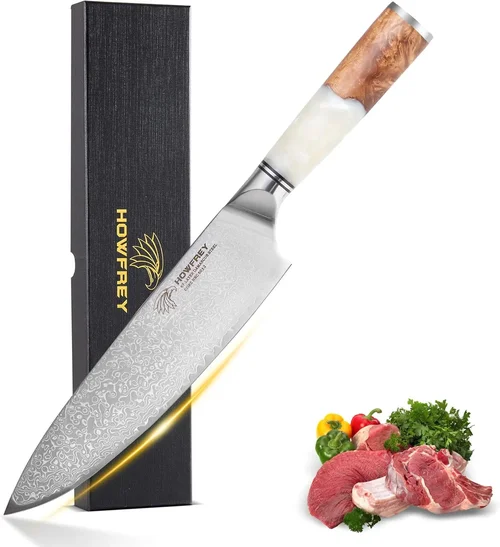
The journey to acquiring your ideal Damascus steel kitchen knife can be fraught with pitfalls. Being aware of common mistakes can save you from buyer’s remorse and ensure your investment is a wise one.
❌ Mistake: Prioritizing Aesthetics Over Performance
Why it’s bad: The mesmerizing patterns of Damascus steel are undeniably attractive, leading many buyers to choose a knife based solely on its visual appeal. However, a beautiful pattern doesn’t automatically equate to superior cutting performance, edge retention, or durability. Some budget knives may use a thin layer of decorative Damascus over inferior core steel, or even worse, a fake laser-etched pattern.
What to do instead: Always delve deeper than the surface. Research the core steel (VG-10, SG2, AUS-10, etc.), its HRC hardness, and the quality of the forging process. The core steel determines the knife’s cutting ability, edge retention, and ease of sharpening. A lesser-known pattern with a high-quality core steel will always outperform a stunning pattern with an inferior core.
❌ Mistake: Ignoring Handle Ergonomics and Balance
Why it’s bad: A knife might look perfect, but if the handle doesn’t feel right in your hand or the knife is poorly balanced, prolonged use will lead to discomfort, hand fatigue, and potentially even unsafe handling. Many first-time buyers focus solely on the blade and overlook this critical aspect.
What to do instead: If possible, always try to hold the knife before buying. If buying online, pay close attention to reviews that discuss handle comfort, material, and the knife’s overall balance. Consider your hand size and preferred grip (pinch grip vs. handle grip). A well-balanced knife should feel like an extension of your arm, allowing for precise control and reducing strain.
❌ Mistake: Neglecting Proper Maintenance & Care Requirements
Why it’s bad: Damascus steel knives, especially those with high-carbon core steels, often require more meticulous care than your average stainless steel knife. Assuming “knife care” is universal can lead to rust, pitting, dull edges, or even damage to the handle. Putting a Damascus knife in the dishwasher is a cardinal sin that will almost certainly ruin it.
What to do instead: Before purchasing, understand the specific care instructions for the knife you’re considering. Be prepared to hand wash and immediately dry your knife after every use. Invest in proper storage (magnetic strip, knife block, blade guard) and learn how to use a honing rod or whetstone to maintain the edge. If you prefer minimal maintenance, opt for a stainless Damascus knife with a VG-10 or SG2 core over a traditional carbon steel one.
❌ Mistake: Buying a Knife That Doesn’t Match Your Cooking Style or Needs
Why it’s bad: Falling in love with a specific blade shape (e.g., a long, thin sujihiki) when your primary cooking involves heavy vegetable chopping will lead to frustration and inefficiency. Similarly, a thick, robust Western-style chef’s knife might not be ideal if you prefer delicate, precise cuts.
What to do instead: Honestly assess your typical cooking tasks. Do you mostly chop vegetables (consider a Santoku or Nakiri)? Slice meats (Gyuto or Sujihiki)? Do you prefer rocking cuts or push cuts? Understand the purpose of different blade profiles and choose one that aligns with your most frequent kitchen activities. For general-purpose home cooking, a well-rounded chef’s knife (Gyuto or Western Chef’s) is usually the best starting point.
❌ Mistake: Falling for Unrealistic Discounts or Generic “Damascus” Claims
Why it’s bad: The market is unfortunately flooded with cheap imitations or knives advertised as “Damascus steel” that are actually laser-etched or made with very low-quality steel cores. Prices that seem “too good to be true” often are, and these knives will quickly disappoint in terms of performance and durability.
What to do instead: Purchase only from reputable brands and trusted retailers. Research the brand’s reputation and look for details about the core steel, HRC hardness, and country of origin. If a knife is marketed as simply “Damascus” without specifying the core steel, layered construction details, or hardness, exercise extreme caution. Remember, true Damascus steel involves skilled craftsmanship and quality materials, which are reflected in the price.
Budget Guidelines: How Much Should You Spend?
The price of Damascus steel kitchen knives varies widely, reflecting differences in materials, craftsmanship, brand reputation, and exclusivity. Understanding these price tiers will help you set realistic expectations and find the best value for your investment.
Entry-Level ($50 – $150)
What to expect: In this range, you’ll find knives that offer a taste of Damascus aesthetics without breaking the bank. These are often made with simpler VG-10 or AUS-10 core steels, with fewer Damascus layers (e.g., 32-45 layers). The fit and finish might be less refined than higher-tier options, but many still offer decent cutting performance for the average home cook. Expect machine-made production, often from mass-producing regions, with basic but functional handle materials like Pakkawood. This is a good starting point for those curious about Damascus steel kitchen knives and wanting a step up from basic stamped knives.
Mid-Range ($150 – $350)
Sweet spot for most buyers: This is where you’ll find excellent value and a significant upgrade in quality. Knives in this category typically feature well-respected VG-10 or AUS-10 core steels with 60-70+ layers of Damascus cladding, offering improved edge retention and sharpness. You’ll notice superior fit and finish, more comfortable and durable handle materials (e.g., higher quality Pakkawood, G-10, or stabilized wood), and better balance. Reputable Japanese brands often have strong offerings here. These knives are suitable for passionate home cooks and aspiring culinary enthusiasts seeking a reliable, high-performing, and beautiful everyday tool.
Premium ($350 – $700)
For enthusiasts and professionals: At this level, you’re entering the realm of high-performance and exquisite craftsmanship. Expect superior powdered metallurgy core steels like SG2 (R2) or ZDP-189, known for exceptional edge retention and hardness (62-64+ HRC). The Damascus patterns will be more intricate and consistently applied, often with a greater number of layers. Handle materials will be premium, ranging from high-grade G-10 to exotic woods or unique resin composites, with impeccable ergonomic designs. These knives often feature thinner grinds for superior cutting ability and may involve more hand-finishing. This tier is ideal for professional chefs, serious foodies, and those who demand peak performance and a luxurious user experience from their Damascus steel kitchen knives.
Luxury ($700+)
Top-tier features & bespoke artistry: This category is reserved for truly artisanal, custom, or highly specialized Damascus steel kitchen knives. You’ll find rare steels, intricate hand-forged Damascus patterns (e.g., ‘San Mai’ with a specific core and soft iron cladding, or complex mosaic patterns), and exotic handle materials like mammoth ivory, bog oak, or custom resin pours. Craftsmanship is often a blend of traditional techniques and modern precision, with many knives being individually handmade by master smiths. Performance is often paramount, with extremely thin grinds and razor-sharp edges, but the aesthetic and collectibility also play a significant role. These knives are investments, often purchased by collectors, professional chefs seeking bespoke tools, or those who appreciate the pinnacle of knife-making art and functionality.
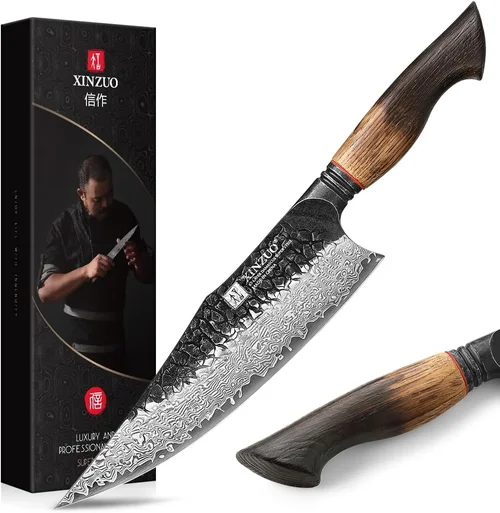
Expert Tips for Getting the Best Deal
Finding the perfect Damascus steel kitchen knife is one thing; acquiring it at the best possible value is another. Here are some expert tips to help you maximize your investment and navigate the market like a seasoned pro.
1. Patience Pays Off: Monitor Sales Cycles
Just like any other premium product, Damascus steel kitchen knives often go on sale during specific times of the year. Key periods include Black Friday/Cyber Monday, holiday sales (Christmas, Father’s Day, Mother’s Day), and sometimes seasonal clearance events (e.g., end-of-summer sales). Many retailers also have loyalty programs or email lists that offer exclusive discounts to subscribers.
2. Shop Reputable Retailers, Both Online and In-Store
Online: Major online retailers like Amazon (ensure you’re buying from a reputable seller or the brand’s official store), specialty knife shops (e.g., Knife Center, Chef Knives To Go, Sur La Table, Williams Sonoma), and direct from manufacturer websites often offer the best selection and competitive pricing. Look for sites with clear return policies and good customer service reviews.
In-Store: Visiting a physical kitchenware store or a specialty knife shop allows you to handle the knife, feel its balance, and inspect the fit and finish firsthand. This is invaluable for assessing ergonomics and balance, which are highly personal factors. Don’t be afraid to ask staff for recommendations and to compare different models.
3. Understand the “Kit” vs. “Individual” Purchase Dynamic
Sometimes, buying a Damascus knife as part of a smaller set (e.g., a 2-piece chef’s and paring knife set) can offer better value than purchasing each knife individually. However, ensure that you actually need all the knives in the set. Don’t buy extra knives just for a perceived discount if they won’t be used.
4. Don’t Overlook Warranty and Return Policies
Even the best knives can have manufacturing defects. Always confirm the warranty period and what it covers. A lifetime warranty against defects is common for quality brands. Equally important is the return policy, especially if you’re buying online. A good return policy allows you to inspect the knife upon arrival and send it back if it doesn’t meet your expectations or if there are any issues.
5. Prioritize Your Needs Over the Hype
It’s easy to get caught up in the latest trends or the most expensive options. Instead, revisit your primary factors: What’s your core steel preference? What blade shape do you need most? What handle style is comfortable for you? Setting these priorities will prevent you from overspending on features you don’t need or an aesthetic that sacrifices performance for your daily tasks.
6. Invest in Accessories Early On
While not directly about buying the knife, having the right accessories from the start saves money and preserves your investment. This includes a good quality honing rod (ceramic is often recommended for harder steels), a sturdy storage solution (magnetic strip or knife block), and a high-quality cutting board (wood or composite, never glass or stone). Protecting your edge and blade from day one will extend the life and performance of your Damascus steel kitchen knife.

Frequently Asked Questions
Q: What exactly is Damascus steel, and why is it special for kitchen knives?
A: Modern Damascus steel, also known as pattern-welded steel, is created by forging together multiple layers of two or more different types of steel. This layering process, followed by acid etching, reveals the distinctive wavy or mottled patterns. It’s special for kitchen knives because the combination of different steels can create a blade with a hard core (for sharpness and edge retention) and softer, tougher outer layers (for flexibility and resistance to chipping), while also offering stunning visual aesthetics.
Q: Is a Damascus steel knife genuinely better than a regular stainless steel knife?
A: “Better” depends on your priorities. True, high-quality Damascus steel knives often offer superior edge retention and sharpness due to their advanced core steels and thinner grinds, especially Japanese Damascus. They also boast unique beauty. However, a well-made standard stainless steel knife from a reputable brand can still perform exceptionally well. The primary advantages of Damascus are the combination of high performance and aesthetic appeal. For optimal performance, focus on the core steel type rather than just the Damascus pattern itself.
Q: How do I sharpen a Damascus steel kitchen knife?
A: Sharpening a Damascus steel knife is similar to sharpening any high-quality knife, but the specific core steel and its hardness will dictate the best method. For daily maintenance, a ceramic honing rod is recommended. For true sharpening, whetstones (water stones) are generally preferred, especially for harder Japanese steels, as they create a very fine edge. Always match the grit sequence to your knife’s edge angle and steel hardness. Many owners of premium Damascus knives opt for professional sharpening to maintain their delicate edges.
Q: Are Damascus knives prone to rust?
A: It depends on the core steel. Most modern Damascus kitchen knives use stainless steel cores like VG-10, AUS-10, or SG2, which are highly corrosion-resistant. However, even “stainless” steel can rust if left wet for extended periods or exposed to highly acidic foods without immediate cleaning. Traditional Damascus knives with high-carbon core steels (like Blue Steel or White Steel) are much more prone to rust and require meticulous care, including immediate drying and occasional oiling, to prevent corrosion.
Q: Can I put my Damascus steel knife in the dishwasher?
A: Absolutely not. Dishwashers are extremely detrimental to Damascus steel kitchen knives. The harsh detergents, high heat, and aggressive water jets can dull the edge, corrode the steel, damage the handle materials, and even warp the blade. Always hand wash your Damascus knife with mild soap and warm water immediately after use, then thoroughly dry it with a soft cloth.
Q: What’s the difference between real Damascus steel and a fake or laser-etched pattern?
A: Real Damascus steel (pattern-welded) has its patterns integrated into the very structure of the blade through layers of different steels forged together. This pattern will be visible even after sharpening the knife. Fake Damascus, often found on very cheap knives, is typically a laser-etched or acid-etched pattern on a single piece of regular steel. This pattern is purely superficial and will disappear with sharpening or heavy use, offering no performance benefits.
Q: What core steel is considered “best” for a Damascus kitchen knife?
A: There’s no single “best” core steel, as it depends on individual preference and maintenance willingness.
- For excellent all-around performance with good corrosion resistance, VG-10 or AUS-10 are popular and highly regarded.
- For ultimate edge retention and sharpness, without venturing into reactive carbon steels, SG2 (R2) is often considered top-tier.
- For traditionalists seeking the absolute sharpest edge and are willing to perform rigorous maintenance, high-carbon steels like Blue Steel (Aogami) or White Steel (Shirogami) are exceptional.
The “best” steel is the one that meets your needs and for which you are prepared to provide the necessary care.
Q: How do I care for the handle of my Damascus knife?
A: Handle care depends on the material.
- Pakkawood, G-10, Micarta, Composite: These synthetic or stabilized materials are highly durable and generally maintenance-free. Simply wipe them clean and dry.
- Natural Wood (e.g., Walnut, Ebony): These handles benefit from occasional oiling (e.g., with mineral oil or food-grade wood conditioner) to prevent drying, cracking, and to maintain their luster. Avoid soaking them in water.
Always ensure the handle is thoroughly dried after washing to prevent water damage or separation.
Q: Why do Damascus steel knives typically cost more than regular stainless steel knives?
A: The higher cost of Damascus steel knives stems from several factors:
- Complex Manufacturing: The forging, layering, and etching process for Damascus steel is intricate and labor-intensive, requiring specialized skills and equipment.
- Premium Materials: Often, Damascus knives use higher-grade core steels and cladding materials.
- Craftsmanship: Many high-quality Damascus knives involve significant hand-finishing and attention to detail.
- Aesthetics: The unique and beautiful patterns add to their appeal and perceived value.
You’re paying for a blend of art, science, and superior performance.
Our Final Recommendations
After dissecting the intricate world of Damascus steel kitchen knives, it’s clear that the best choice is a highly personal one, balancing performance, aesthetics, budget, and maintenance commitment. Here are our top recommendations to guide your final decision:
Best for Budget-Conscious Buyers: Quality VG-10 Core Damascus Chef’s Knife
For those looking to experience the beauty and performance of Damascus steel without a significant outlay, a well-regarded VG-10 core Damascus chef’s knife is an excellent choice. Look for brands known for consistent quality in their mid-range offerings. These knives provide a fantastic balance of sharpness, edge retention, and corrosion resistance, coupled with attractive patterns. They represent a significant upgrade from standard kitchen knives and are relatively easy to maintain, making them a wise first step into premium cutlery.
Best Overall Value: AUS-10 or Premium VG-10 Damascus Gyuto/Santoku
For the avid home cook or aspiring chef who wants serious performance without entering the luxury tier, an AUS-10 or a higher-tier VG-10 Damascus Gyuto (Japanese chef’s knife) or Santoku offers the best overall value. Knives in this category typically feature more layers, superior fit and finish, and often more ergonomic handle designs (like G-10 or high-quality Pakkawood). They provide exceptional cutting performance, hold a razor edge well, and stand up to daily use. This is the sweet spot where performance, durability, and stunning aesthetics converge at a justifiable price point.
Best Premium Option: SG2/R2 Powdered Steel Core Damascus Chef’s Knife
If you’re a professional chef, a culinary enthusiast who demands the absolute best, or simply someone who appreciates peak performance and luxurious craftsmanship, an SG2 (R2) powdered steel core Damascus chef’s knife is our premium recommendation. These blades boast phenomenal edge retention, extreme sharpness, and impressive hardness. While they come with a higher price tag and might require more specialized sharpening, their superior performance and lasting beauty make them a true investment. Expect exquisite patterns, meticulous hand-finishing, and a balance that makes them a joy to wield for hours.
Best for Beginners: Entry-Level VG-10 Santoku with a Comfortable Handle
For those new to the world of high-performance knives, a Damascus Santoku with a VG-10 core and a comfortable, easy-to-grip handle (like Pakkawood or G-10) is ideal. The Santoku’s flatter profile is intuitive for push cutting, and its shorter blade is less intimidating than a full-sized chef’s knife. VG-10 steel offers good performance without being overly brittle, and these knives are generally more forgiving in terms of maintenance. The goal here is to introduce you to the joy of a sharp, beautiful knife without overwhelming you with advanced care requirements or specialized techniques.
Best for Advanced Users & Collectors: High-Carbon Core Damascus or Artisanal Custom Blade
For the seasoned chef who craves the ultimate in sharpness and cutting feel, or the collector who values unique artistry and bespoke quality, a high-carbon core Damascus knife (e.g., Aogami Super core) or a custom-made artisanal piece is the ultimate choice. These knives offer unparalleled edge retention and a sublime cutting experience, often with unique patterns and exotic handle materials. Be prepared for rigorous maintenance (immediate drying, oiling, specific sharpening techniques) to prevent rust. These are not just tools; they are functional works of art, embodying centuries of knife-making tradition and cutting-edge metallurgy.
Conclusion: Making the Right Choice
Embarking on the journey to purchase a Damascus steel kitchen knife is an exciting venture that promises to elevate your culinary experience. We’ve explored the critical factors from the intricate metallurgy of their construction and the ergonomic considerations of their handles, to understanding market variations and avoiding common pitfalls. The diversity in core steels, blade geometries, and artisanal craftsmanship means there truly is a perfect Damascus knife for every individual and every kitchen task.
Remember that the “best” Damascus steel kitchen knife isn’t necessarily the most expensive or the one with the most layers. It’s the knife that perfectly aligns with your specific cooking style, fits comfortably in your hand, meets your performance expectations, and that you are prepared to care for diligently. Prioritize the core steel for performance, the handle for comfort, and the overall build quality for durability.
We encourage you to take the insights from this guide, conduct your own research, and consider your personal needs and preferences above all else. A well-chosen Damascus steel kitchen knife is more than just an instrument; it’s an extension of your passion for food, a beautiful piece of art, and a reliable partner in your culinary adventures. Choose wisely, care for it well, and enjoy the unparalleled precision and beauty that a truly great Damascus steel knife brings to your kitchen.