Imagine transforming your kitchen faucet into a versatile tool that effortlessly extends your reach to the garden. It sounds like a dream, right?
But with the right guidance, you can easily connect your garden hose to your kitchen faucet. No need for complicated tools or expert skills; just a few simple steps can unlock a world of convenience. Picture yourself watering your plants, filling outdoor containers, or washing your car with ease, all from the comfort of your kitchen.
Intrigued? Let’s dive into the process that will make your life simpler and your outdoor chores more manageable. You’ll wonder how you ever lived without this handy hack.
Choosing The Right Adapter
Finding the correct adapter is crucial. Not all kitchen faucets fit garden hoses. Measure the faucet end to know the size. Most faucets use a standard size. Check your garden hose’s connector. Adapters come in different materials. Metal adapters are strong and durable. Plastic adapters are lightweight and cheap. Each material has its advantages. Read the packaging for compatibility details. Buy the right one for your needs.
Some adapters have rubber washers. These help prevent leaks. Tighten the adapter well to stop water flow issues. Remember to test it before use. Make sure it fits snugly. A loose adapter can cause problems. It’s important to get this step right.

Credit: www.amazon.com
Gathering Necessary Tools
Before connecting a garden hose to the kitchen faucet, gather the tools. You will need a hose adapter, a kitchen faucet adapter, and the garden hose. Check the faucet type to ensure compatibility. Faucets can have threads inside or outside. Choose the right adapter for the faucet.
Sometimes, a rubber washer is needed for a tight seal. This prevents leaks. A wrench might help if the adapters are tight. It can also aid in securing the connection.
Ensure all parts are clean. Dirt can cause leaks or poor connections. Keep a towel handy to wipe spills. A small bucket can catch any dripping water. Gathering these tools makes the task easier and faster.
Preparing The Kitchen Faucet
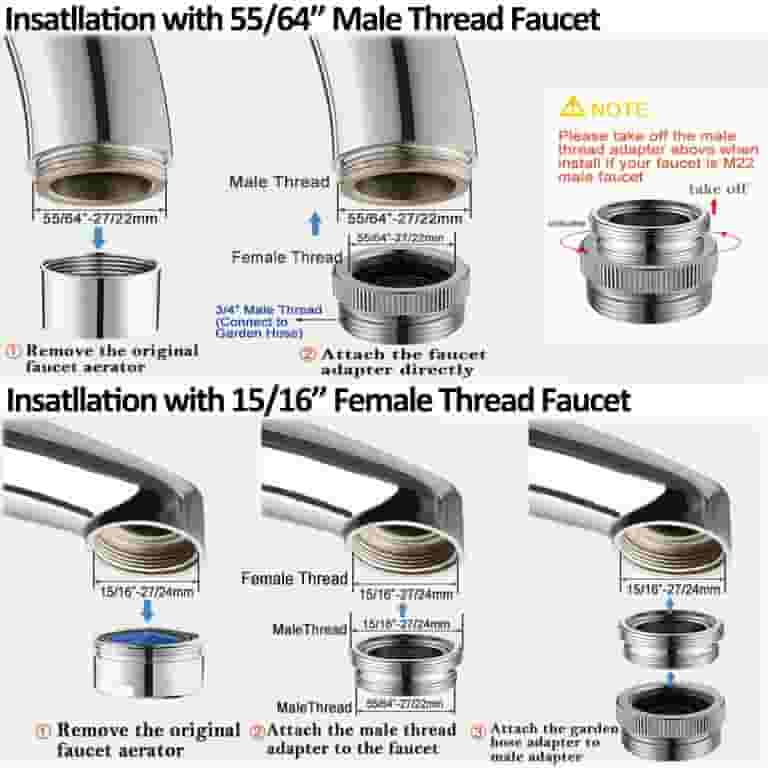
First, check if your kitchen faucet has a threaded spout. A threaded spout makes it easy to attach a hose. If it doesn’t, you might need an adapter. These adapters can be found in hardware stores. They help connect hoses to faucets without threads.
Once you have the adapter, attach it to the faucet. Ensure it’s tight and secure. Loose adapters might leak. Turn offthe water supply before attaching the adapter. This prevents any sudden sprays.
Check the adapter for leaks once attached. You can do this by slowly turning the water on. If no leaks appear, your faucet is ready. Now, you can connect your garden hose safely.
Credit: www.walmart.com
Attaching The Adapter
First, find the correct adapter for your faucet. Check the size of the faucet. Most kitchen faucets have a threaded end. Choose an adapter that fits this thread. It must be snug and secure. Some faucets may need a special size. You can find adapters at hardware stores.
After selecting the adapter, attach it to the faucet. Twist it gently until it’s tight. Make sure it’s secure but don’t over-tighten. Over-tightening can damage the faucet. Once attached, connect the garden hose. The hose should fit snugly on the adapter. Double-check the connection. Ensure there are no leaks. If there are leaks, tighten the hose or adapter more.
To check for leaks, turn the faucet on slowly. Look for any water escaping. If you see leaks, tighten the connections again. Now, you’re ready to use your hose!
Connecting The Hose
First, find a adapterthat fits your faucet. Most stores sell them. Screw the adapter onto the faucet tightly. Make sure it’s secure.
Next, attach the hoseto the adapter. Push it onto the nozzle. Twist it so it stays firm.
Turn on the faucet slowly. Watch for leaks. If you see water dripping, tighten the connections. Ensure the hose is straight. Kinks can stop water flow.
Check the hose length. It should reach the garden. If not, use an extension.
After watering, disconnect the hose. Dry the nozzle and store the hose safely.

Credit: www.amazon.com
Testing The Connection
Turn on the kitchen faucetslowly. Watch for any leaksaround the connection. If you see water dripping, tighten the hose. Check again to make sure the leak stops.
Let the water run for a minute. Ensure the flow is steady. If water sprays everywhere, adjust the connection. Make sure the hose is attached securely. Stop the water flow if needed. It helps to fix any issues.
Test the hose by stretching it gently. Make sure it stays connected. The hose should not come loose. Ensure it is firmly attachedto the faucet. This prevents unexpected disconnectionsduring use.
Observe the hose for twistsor kinks. Straighten it if necessary. This ensures water flows smoothly. A twisted hose can block water. Smooth out any bends for best results.
Frequently Asked Questions
How Do I Connect A Hose To My Kitchen Faucet?
To connect a garden hose to your kitchen faucet, use a faucet adapter. Unscrew the aerator from the faucet, then attach the adapter. Once the adapter is secure, connect the hose to the adapter. Ensure all connections are tight to prevent leaks.
Can All Kitchen Faucets Connect To A Garden Hose?
Not all kitchen faucets can connect to a garden hose directly. Most modern faucets need an adapter to fit the hose. Check your faucet’s compatibility before purchasing an adapter. If unsure, consult the faucet’s manufacturer or a hardware specialist for guidance.
What Type Of Adapter Do I Need For Connection?
You’ll need a faucet-to-hose adapter for this connection. Choose an adapter that matches your faucet’s threading. Common types include male or female thread adapters. Measure your faucet’s diameter to ensure a proper fit. This ensures a leak-free, secure connection for effective water flow.
Is Connecting A Hose To A Kitchen Faucet Safe?
Yes, it’s generally safe to connect a hose to a kitchen faucet with the right adapter. Ensure all connections are tight and secure. Avoid using excessive force when connecting to prevent damage. Regularly check for leaks to maintain a safe and efficient setup.
Conclusion
Connecting a garden hose to a kitchen faucet is straightforward. Follow simple steps for success. First, gather the right adapter. Then, attach securely to the faucet. Tighten to prevent leaks. Test water flow to ensure proper connection. This setup helps indoor watering tasks.
Handy for plant care. Also useful for cleaning. Make sure to detach when done. Prevent wear and tear on the faucet. Regular checks help maintain efficiency. Enjoy the convenience of indoor water use. Share this tip with friends. Simple solutions make life easier.
Happy gardening!