Are your kitchen knives starting to feel dull and frustrating to use? You don’t have to struggle with them or buy new ones right away.
Learning how to sharpen a kitchen knife with a rod is easier than you think—and it can save you time and money. You’ll discover simple, step-by-step tips that anyone can follow to bring back your knife’s sharp edge. Keep reading to unlock the secret to slicing smoothly and cooking like a pro every time.
Choosing The Right Sharpening Rod
Sharpening rods come in different materialsand grit levels. Common materials include steel, ceramic, and diamond-coated rods. Steel rods are good for regular use. Ceramic rods provide a finer edge. Diamond rods are very abrasive and work fast.
Grit levels show how rough or smooth the rod is. Coarse gritremoves more metal and fixes dull knives quickly. Fine gritsmooths and polishes the blade for a sharp edge.
| Material | Best For | Grit Level |
|---|---|---|
| Steel | Everyday sharpening | Medium |
| Ceramic | Refining edge | Fine |
| Diamond-coated | Very dull blades | Coarse to medium |
Choose rods based on your knife type. Soft steel knives work well with ceramic rods. Hard steel knives need diamond or steel rods. Match the rod to the knife’s hardness for best results.
Preparing Your Knife And Rod
Before sharpening, clean the knifeto remove any dirt or food. Use warm water and mild soap. Rinse well and dry with a soft cloth. A clean blade sharpens more evenly and safely.
Safety is very important. Hold the knife and rod firmly to avoid slips. Keep fingers away from the blade edge. Use a non-slip mat or towel to keep your workspace steady.
Set up a stable workspace with good lighting. Make sure the surface is flat and steady. This helps keep control while sharpening. Avoid distractions to focus on safety and precision.
Basic Sharpening Technique
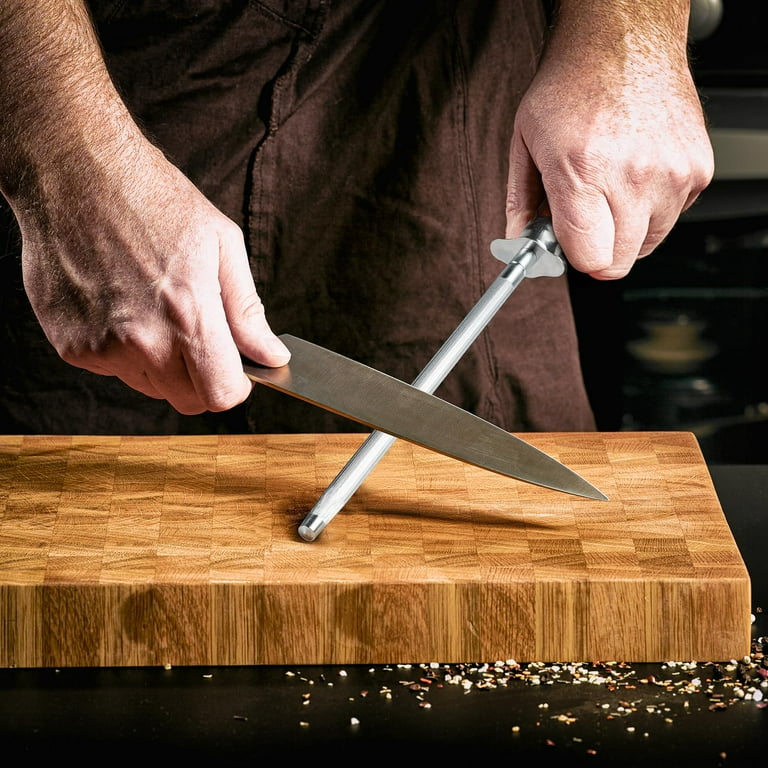
Hold the sharpening rod firmly with your non-dominant hand. Grip the knife handle with your dominant hand. Keep your fingers safe by holding the knife away from the blade edge. Position the rod vertically with its tip resting on a stable surface.
| Knife Angle | Description |
|---|---|
| 15-20 degrees | Ideal angle to sharpen most kitchen knives. |
| Less than 15 degrees | Sharper edge but more delicate. |
| More than 20 degrees | Stronger edge but less sharp. |
Move the knife blade down the rod in smooth strokes. Apply light to medium pressure. Stroke from the base to the tip of the blade. Repeat the motion evenly on both sides of the blade. Keep the angle consistent throughout the process.

Credit: www.amazon.com
Advanced Sharpening Tips
Dull or damaged edgesneed extra care. Start by holding the rod firmly. Use slow, steady strokes to reshape the blade. Avoid pressing too hard to prevent damage. For chipped knives, focus on the damaged area first.
Consistency matters. Keep the angle between 15 to 20 degreeswhile sharpening. Repeat strokes evenly on both sides. This keeps the edge sharp and balanced. Use the same number of strokes per side.
Different knives need different care. Japanese kniveshave thinner blades and require gentle strokes. Western knivesare thicker and can handle more pressure. Adjust your technique based on the knife’s style and condition.
After Sharpening Care
Cleaning the knife after sharpening is very important. Use warm water and mild soap. Wipe the blade carefully to remove metal dust. Dry the knife completely with a soft cloth to stop rust.
Testing sharpness helps check your work. Try slicing a piece of paper or tomato skin. A sharp knife cuts smoothly without much force. If it tears or slips, sharpen again.
Storing your knife safely protects the blade and people. Use a knife block, magnetic strip, or blade guard. Avoid tossing knives in drawers where they get dull or damaged.
Credit: www.walmart.com
Common Mistakes To Avoid
Using the wrong angle can damage your knife blade. Keep a steady angle, usually around 20 degrees. Too steep or too shallow will make sharpening less effective.
Sharpening too much removes too much metal. It makes the blade thin and weak. Stop as soon as the edge feels sharp.
- Always hold the sharpening rod firmly to avoid slips.
- Wear gloves to protect your hands from cuts.
- Keep fingers away from the blade’s path at all times.

Credit: knifeaid.com
Frequently Asked Questions
How Do I Sharpen A Kitchen Knife With A Rod?
Hold the rod vertically on a stable surface. Angle the knife at 20 degrees. Slide the blade down the rod from base to tip. Repeat 5-10 times per side for a sharp edge.
What Angle Should I Use With A Sharpening Rod?
Use a 15 to 20-degree angle between the knife blade and rod. This angle ensures effective sharpening without damaging the blade’s edge.
How Often Should I Sharpen Kitchen Knives With A Rod?
Sharpen your knives every 2-4 weeks if used regularly. Frequent honing maintains sharpness and prolongs blade life between full sharpenings.
Can I Use Any Rod To Sharpen Kitchen Knives?
Use a ceramic or steel sharpening rod designed for knives. Avoid using rough or improper rods that may damage the blade.
Conclusion
Sharpening a kitchen knife with a rod takes practice and patience. Hold the rod firmly and angle the blade correctly. Move the knife smoothly along the rod to get a sharp edge. Regular sharpening keeps your knife safe and easy to use.
A sharp knife makes cooking faster and more enjoyable. Keep your rod clean and store it properly after use. Try these steps often to keep your knives in top shape. Simple tools, simple skills—good results. You can do this!