Are you planning to install a new kitchen faucet but unsure about the right hole size? Getting this detail wrong can lead to leaks, wobbly fixtures, or costly repairs.
Knowing the exact hole size you need will save you time, money, and frustration. You’ll discover the simple guidelines to measure and choose the perfect hole size for your kitchen faucet. Keep reading to make sure your installation goes smoothly and your kitchen looks flawless.

Credit: www.amazon.com
Standard Hole Sizes
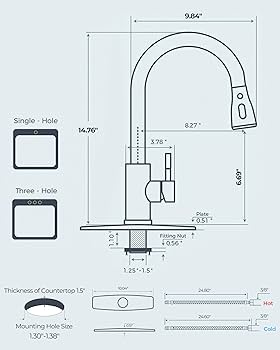
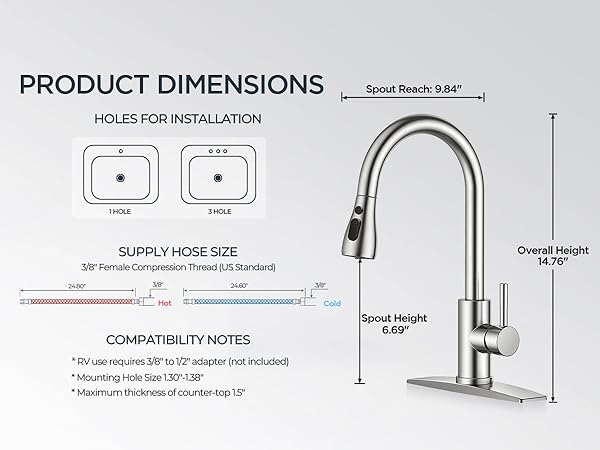
The standard hole sizefor most kitchen faucets is 1 3/8 inchesin diameter. This size fits most single-hole faucets easily.
Single-hole faucetsneed just one hole, usually 1 3/8 inches wide. This type is easy to install and looks neat.
| Faucet Type | Number of Holes | Hole Diameter | Spacing (if multiple holes) |
|---|---|---|---|
| Single-Hole Faucets | 1 | 1 3/8 inches | N/A |
| Center-Set Faucets | 3 | 1 3/8 inches each | 4 inches apart |
| Widespread Faucets | 3 | 1 3/8 inches each | 6 to 16 inches apart |
Center-set faucetshave three holes, spaced 4 inches apart. They fit sinks with holes close together.
Widespread faucetsalso use three holes but are spaced further apart. The distance ranges from 6 to 16 inches.
Measuring Your Sink
Check the number and size of existing holesin your sink. Most sinks have one, two, or three holes for faucets and accessories. Use a ruler or tape measure to find the diameterof each hole. The standard hole size is usually 1 3/8 incheswide, but some sinks may vary.
Measure the thicknessof the sink surface around the hole. This helps to choose a faucet that fits well and stays secure. Sink thickness can range from 1/16 inch to over 1/2 inch. Also, measure the distance between holes if there are multiple ones for separate hot and cold water handles.
Multiple Hole Configurations
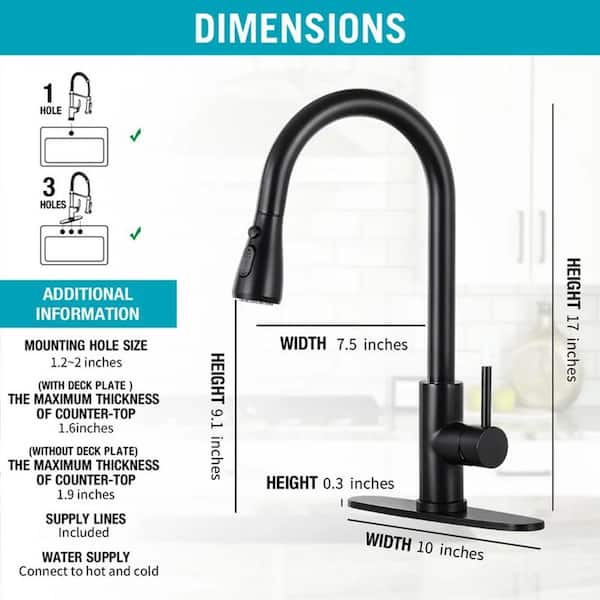
Kitchen faucets usually need one to four holes in the countertop or sink. The most common are single-holeand three-holesetups. Single-hole faucets need just one hole for both water lines and the handle.
Drilling extra holes helps add features like a soap dispenser or a sprayer. These holes are often 1 to 1.5 inches wide. Make sure the holes are evenly spaced and the right size for each part.
Hole covers and deck plates hide unused holes. They come in different sizes and finishes. Using covers or plates gives a neat look and stops water from leaking into the cabinet below.
Credit: www.amazon.com
Tools For Drilling Holes
Using the right hole sawor drill bitis key for a clean hole. Most kitchen faucets need a hole size of 1 3/8 inches. Hole saws come in various sizes. Choose one that matches your faucet’s base diameter.
Drill bits are good for small pilot holes. They help guide the hole saw for accuracy. Use a cordless drillfor better control and power.
- Wear safety glassesto protect your eyes from debris.
- Use ear protectionif the drill is loud.
- Keep hands away from the drill bit while drilling.
- Drill slowly to avoid cracking the countertop.
- Check underneath for any pipes or wires before drilling.
Material Considerations
Stainless steel sinksneed holes that are easy to drill. A 1 to 1.5 inch holefits most kitchen faucets. Steel is tough, so use a special bit for cutting. Make sure the hole edges are smooth to avoid leaks.
Porcelain and composite sinksneed care to avoid cracks. Usually, a 1.25 to 1.5 inch holeworks well. Use a drill with a diamond bit for clean cuts. Take time and drill slowly to protect the sink.
Credit: www.homedepot.com
Installing The Faucet
Place the faucet over the hole carefully. Make sure the faucet is centeredon the sink or countertop. Align the faucet so the handles and spout face the correct direction. This helps the faucet work properly and look good.
Apply a bead of plumber’s puttyor silicone around the base of the faucet. This will sealout water and stop leaks. Press the faucet down firmly onto the sink.
Underneath the sink, use the mounting hardware to tightenthe faucet. Tighten the nuts by hand first, then use a wrench. Do not overtighten, or you may damage the faucet or sink.
Frequently Asked Questions
What Size Hole Is Standard For Kitchen Faucets?
The standard hole size for kitchen faucets is 1. 25 to 1. 5 inches in diameter. Most faucets fit this range. Always check your faucet’s specifications before drilling.
Can I Use A Larger Hole For My Kitchen Faucet?
Using a larger hole than recommended can cause stability issues. It may require additional support or an adapter plate. Always match hole size to faucet requirements for secure installation.
How Do I Measure The Hole Size For A Kitchen Faucet?
Use a tape measure or ruler to measure the diameter of the hole. Measure across the widest part of the hole in inches. This ensures your faucet fits properly.
Are Multiple Holes Needed For Kitchen Faucet Installation?
Some kitchen faucets require multiple holes for handles or sprayers. Standard installations often need 1 to 3 holes. Check your faucet design before preparing the sink.
Conclusion
Choosing the right hole size for your kitchen faucet matters a lot. A correct hole ensures your faucet fits well and works smoothly. Most faucets need holes between one and one and a half inches wide. Measure carefully before drilling to avoid mistakes.
Check your faucet’s instructions for exact hole size. A proper fit keeps your sink neat and leak-free. Take your time, and your kitchen will look and work better. Simple steps can make a big difference in your kitchen’s feel.