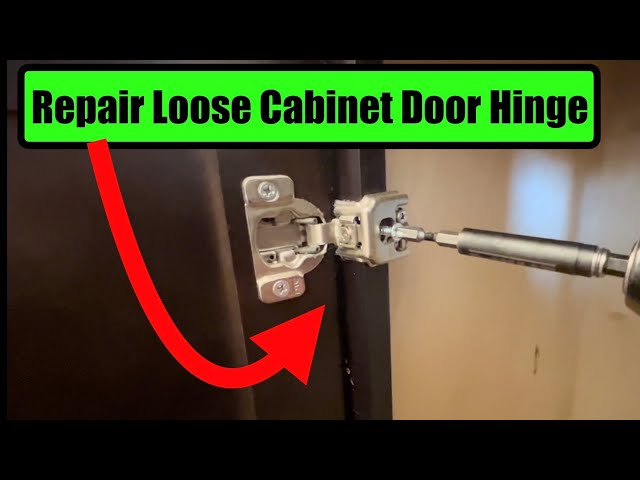
Are your kitchen cabinet doors sagging, squeaking, or not closing properly? These common problems often come down to faulty hinges.
Fixing them yourself can save you time, money, and the hassle of calling a professional. In this guide, you’ll learn simple, step-by-step tips to repair your cabinet hinges quickly and effectively. By the end, your cabinets will look and work like new.
Ready to get started? Let’s dive in and bring your kitchen back to life!
Identify Common Hinge Issues
Kitchen cabinet hinges often face common issues that affect door movement.
- Loose screwscause doors to sag or not close properly.
- Rust or corrosioncan make hinges stiff and hard to move.
- Broken hinge partsstop the door from staying open or closed.
- Misalignmentcauses doors to rub against the frame or gap unevenly.
- Worn-out springsreduce the tension needed for smooth door motion.
Checking these problems helps decide the right repair steps.

Credit: www.reddit.com
Gather Necessary Tools
Repairing kitchen cabinet hinges requires a few simple tools. Prepare these items before starting:
- Screwdriver(Phillips or flathead, based on hinge screws)
- Replacement hingesif old ones are broken
- Drillfor stubborn screws or new holes
- Wood fillerto fix stripped screw holes
- Measuring tapeto align hinges correctly
- Levelto ensure doors hang straight
Keep a clean workspace and good lighting. This helps spot problems clearly. Wearing safety glasses is a smart choice too.
Remove The Cabinet Door
Start by opening the cabinet door fully. Look inside the hinge area. Find the screws that hold the door to the cabinet frame. Use a screwdriver to loosen these screws carefully. Support the door with one hand to keep it steady. Gently pull the door away from the cabinet. Place the door on a soft surface to avoid scratches. Check the hinge parts for damage or dirt. Cleaning or replacing hinges is easier with the door off. Keep all screws in a small container to avoid loss. This step prepares the door for repair or adjustment.

Credit: www.reddit.com
Fix Or Replace Hinges
Check the hinge closely to find damage or rust. Tighten loose screws with a screwdriver. If screws do not hold, use longer screws or wall anchors. Clean the hinge with a cloth to remove dirt and grease. Apply a small amount of oil to make it move smoothly.
Replace the hinge if it is bent, broken, or rusted beyond repair. Match the new hinge size and style with the old one. Use the old hinge as a guide to mark new screw holes. Attach the new hinge firmly to the cabinet and door.
Reinstall And Adjust The Door
First, place the hinge on the door and align the screw holes.
Use a screwdriver to fasten the screws tightly but gently.
Check that the door fits evenly in the frame and closes smoothly.
Adjust the door by loosening screws slightly and moving it up or down.
Tighten the screws once the door is properly aligned.
- Make sure the door does not rub against the cabinet.
- Test the door by opening and closing several times.
- Tighten any loose screws after testing.
Repeat the process for each cabinet door that needs repair.

Credit: www.amazon.ie
Frequently Asked Questions
How Do I Fix A Loose Kitchen Cabinet Hinge?
Tighten the screws on the hinge using a screwdriver. Replace damaged screws if needed.
What Tools Are Needed To Repair Cabinet Hinges?
You need a screwdriver, replacement screws, and possibly wood filler for damaged holes.
Can I Replace Kitchen Cabinet Hinges Myself?
Yes, replacing hinges is simple with basic tools and a little patience. Follow step-by-step guides.
Conclusion
Fixing kitchen cabinet hinges can save time and money. Small tools and patience do the job well. Tighten screws or replace broken parts carefully. Properly working hinges keep cabinets secure and easy to open. Regular checks help avoid bigger problems later.
Enjoy a smoother kitchen experience with simple repairs. Keep your cabinets strong and functional with these steps. Repairing hinges does not need expert skills. Try these tips to maintain your kitchen cabinets today.