Are you wondering if a play kitchen is the right toy for your child? Choosing the perfect age to introduce this fun and educational toy can make all the difference in how much your little one enjoys and benefits from it.
Whether you want to spark creativity, encourage role-playing, or develop fine motor skills, knowing when to bring a play kitchen into your home is key. Keep reading to discover the ideal age range for a play kitchen and how it can grow with your child, turning playtime into a learning adventure you’ll both love.
Ideal Age Range
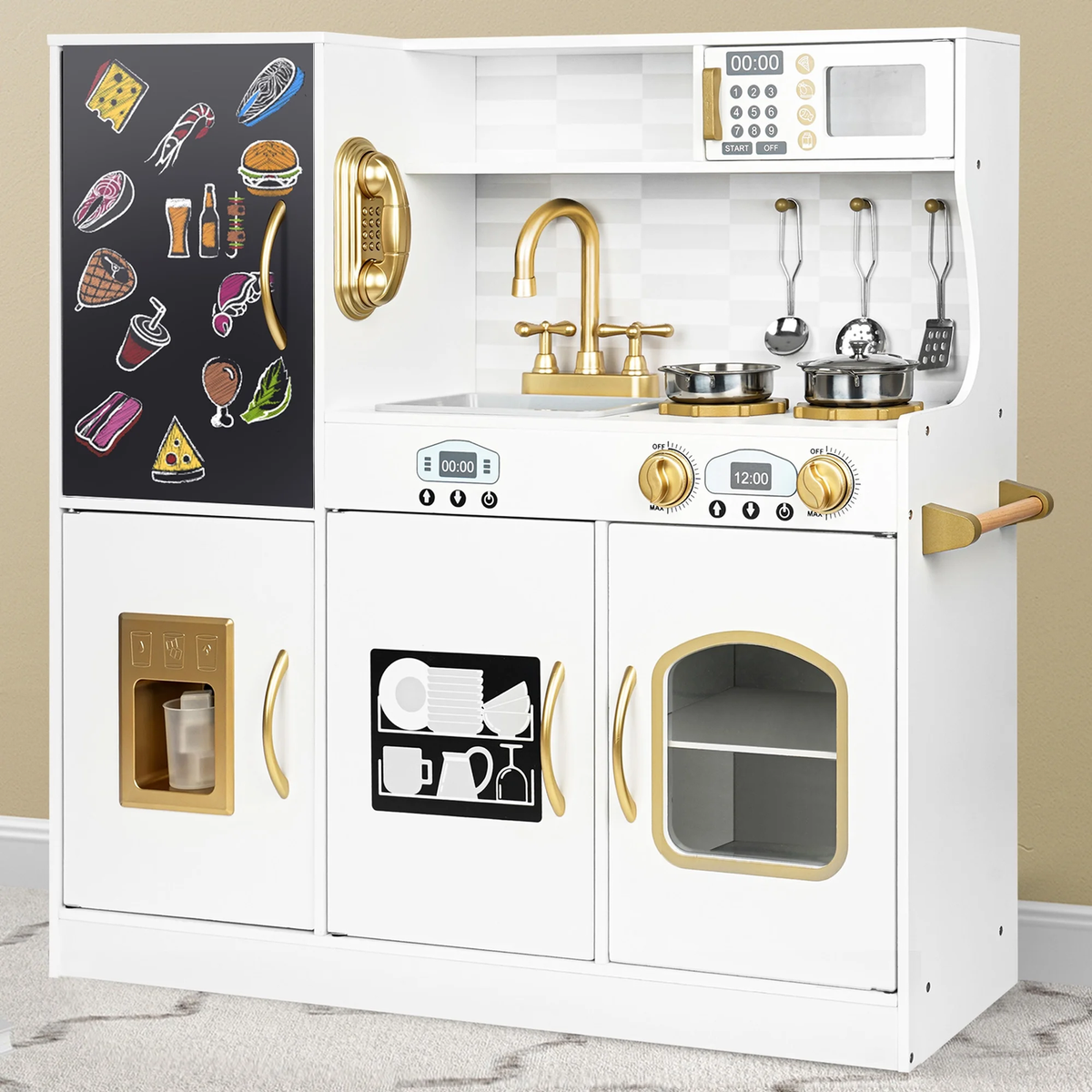
The ideal age for a play kitchenusually starts at 2 years old. Toddlers enjoy pretending to cook and serve food. It helps develop imaginationand motor skills.
Children up to about 6 yearsfind play kitchens very fun and educational. It encourages role-playingand social skills when playing with others.
- 2-3 years:Simple play, exploring shapes and colors.
- 4-5 years:More detailed pretend cooking and storytelling.
- 6 years and up:Advanced play, including organizing and sharing.
Credit: www.ebay.com
Developmental Benefits
Playing with a kitchen set helps children learn many important skills. It improves imaginationas kids pretend to cook and serve food. This kind of play builds social skillsbecause children share and take turns with friends or family. It also helps develop languageby naming foods and kitchen tools. Fine motor skills grow as kids open doors, turn knobs, and hold small utensils. These activities improve hand-eye coordination too.
Role-playing in a kitchen also teaches problem-solving. Kids figure out how to arrange items or decide what to “cook.” It supports emotional developmentby allowing children to express feelings and ideas safely. Playing with a kitchen encourages independenceand confidenceas kids practice daily life skills in a fun way.
Safety Considerations
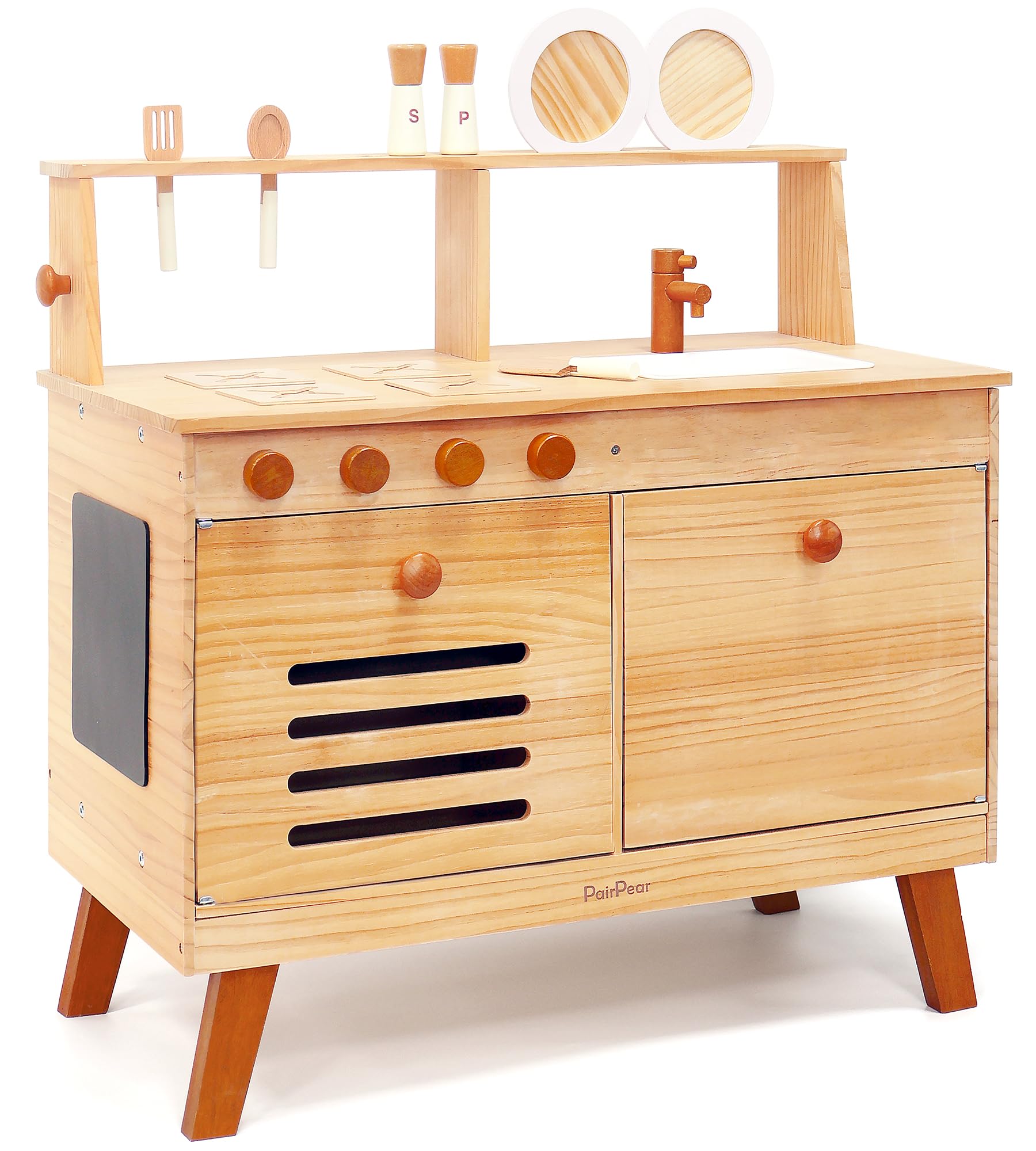
Choose a play kitchen made from non-toxic materials. This ensures safety for young children. Check for smooth edgesto avoid cuts or scrapes. Avoid small parts that can be choking hazards. Always look for age recommendations on the packaging.
Ensure the kitchen is stable and won’t tip over easily. Supervise children during play to prevent accidents. Keep the area around the kitchen clear to avoid tripping. Clean the kitchen regularly to maintain hygiene.
- Non-toxic paint and materials
- Rounded edges and corners
- No small detachable pieces
- Stable base to prevent tipping
- Age-appropriate size and design
- Regular cleaning and maintenance
Credit: www.amazon.com
Choosing The Right Size
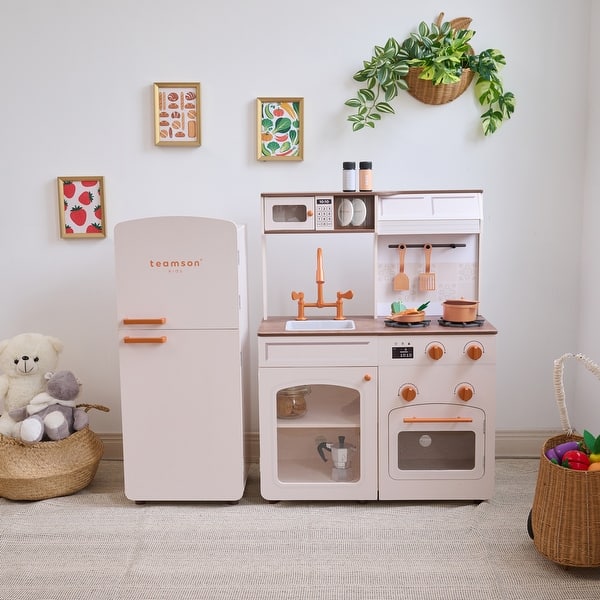
Choosing the right size for a play kitchen is important. It should fit your child’s height well. A kitchen too tall or too short can be frustrating.
Most play kitchens suit kids aged 2 to 6 years. Toddlers need smaller kitchens with simple features. Older kids enjoy bigger kitchens with more details.
| Child’s Age | Recommended Kitchen Height | Features |
|---|---|---|
| 2-3 years | 18-24 inches | Simple knobs, easy-to-use doors |
| 4-5 years | 24-30 inches | More buttons, pretend appliances |
| 6+ years | 30+ inches | Detailed design, realistic look |
- Measure your child’s height before buying.
- Allow space for standing and moving.
- Check if the kitchen is sturdy and safe.
Transitioning To Real Cooking
Play kitchens help children learn basic cooking skills safely. They build confidence before using real kitchen tools. Children usually enjoy pretending to cook and serve food. This fun activity teaches them about kitchen safety and cleanliness.
Parents can guide children by:
- Showing how to use real kitchen tools carefully
- Supervising all cooking activities closely
- Starting with simple tasks like washing vegetables
- Explaining the importance of washing hands before cooking
- Teaching about hot surfaces and sharp objects
Gradually, children can help with small cooking jobs. This helps them feel involved and learn skills step by step. Patience and praise encourage a positive learning experience.
Credit: buybuybaby.bedbathandbeyond.com
Frequently Asked Questions
What Age Is Best For A Child’s First Play Kitchen?
Children aged 2 to 4 years enjoy their first play kitchen the most. It helps with creativity and motor skills.
Can Toddlers Safely Use Play Kitchens?
Yes, most play kitchens are designed for toddlers with safe, non-toxic materials and no small parts.
How Does A Play Kitchen Benefit Preschoolers?
Play kitchens boost imagination, social skills, and hand-eye coordination in preschool-aged children. They learn by pretending.
Conclusion
Choosing the right play kitchen depends on your child’s age and skills. Toddlers enjoy simple sets with big pieces. Older kids like kitchens with many features and details. Play kitchens help develop creativity and social skills. They offer hours of fun and learning.
Start with safe, age-appropriate toys. Watch your child explore and imagine. A good play kitchen grows with your child’s interests. Keep it simple, safe, and fun for best results.