Imagine the heart of your home, bustling with activity, where meals are prepared and stories shared—your kitchen. But beneath the surface of your kitchen sink, invisible threats lurk, waiting to jeopardize your family’s health.
You might not realize it, but your kitchen sink is a breeding ground for germs, bacteria, and other contaminants. These invisible invaders can spread to the foods you eat and the utensils you use, making cleanliness not just a preference, but a necessity.
So, how can you ensure that your kitchen sink stays hygienic and safe? The solution is simple: regular and effective disinfection. You deserve peace of mind knowing that your kitchen is not only clean but truly sanitized. Dive into this guide to discover easy, effective methods to disinfect your kitchen sink. Protect your loved ones and transform your kitchen into a safe haven. Ready to learn how? Let’s get started!
Importance Of A Clean Sink
A clean sink keeps germs away. Germs can make you sick. It’s important to wash the sink often. Food bits can stick in the sink. They can cause bad smells. A dirty sink can spread germs. Keeping it clean is easy.
Use soap and water. Scrub with a sponge. Rinse well. Dry with a clean towel. This stops germs from growing. A clean sink is safe for your family.
Every day, many hands touch the sink. Germs can spread fast. Clean sinks look nice too. They shine bright in the kitchen. A clean sink makes cooking fun. Keep your sink clean every day!

Credit: www.express.co.uk
Materials Needed
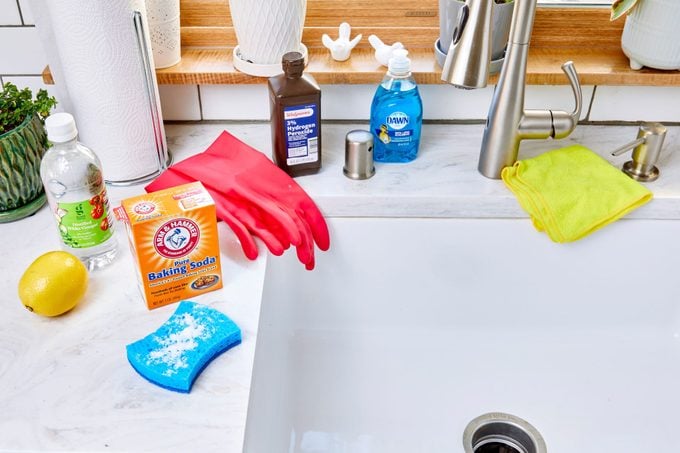
Gather these items before starting. You need white vinegar, which kills germs. Also grab baking soda. It helps scrub away dirt. Get a scrub brushor sponge. It’s important for cleaning. You will also need hot water. Hot water rinses the sink well. Finally, have some paper towelsready. They dry the sink.
All these materials are easy to find. You might already have them at home. Using these materials, your sink will be clean and fresh. Follow the steps carefully. Your kitchen will be safer and cleaner.
Preparing The Sink
Cleaning the kitchen sink starts with removing dishes and debris. Use a mixture of vinegar and baking soda for disinfecting. Scrub thoroughly to ensure all surfaces are clean and bacteria-free.
Clearing The Area
Start by removing all items around the sink. Clear away soap, sponges, and dishes. Make sure to empty any bins nearby. This helps keep the area tidy and ready for cleaning.
Removing Debris
Check the sink for leftover food scraps. Use a paper towel to wipe away crumbs. Rinse the sink with warm water. This removes any loose dirt or grime. Make sure the sink is empty before disinfecting.
Credit: modern-maids.com
Natural Cleaning Solutions
Mix baking soda and vinegar for a powerful cleaner. Sprinkle baking soda in the sink. Pour vinegar over it slowly. Watch it fizz! This fizz lifts dirt. Scrub gently with a sponge. Rinse with warm water. Your sink will shine.
Use lemon and salt to clean stubborn spots. Cut a lemon in half. Sprinkle salt on the cut side. Rub the lemon on the sink surface. The lemon juice kills germs. Salt scrubs away grime. Rinse well with water. Enjoy a fresh-smelling kitchen.
Using Commercial Disinfectants
Disinfect kitchen sinks effectively with commercial disinfectants. Spray generously and let the solution sit for ten minutes. Rinse thoroughly to eliminate germs and odors, ensuring a clean and fresh space.
Choosing The Right Product
Picking the best disinfectant is important. Look for products labeled for kitchen use. Check if the product kills germs. Read labels for ingredients and instructions. Some disinfectants work faster than others. Choose a product that suits your needs. Make sure it’s safe for your sink material. Stainless steel and porcelain may need different products. Verify if it’s safe for food areas.
Safety Precautions
Always wear gloves to protect your hands. Avoid touching your face during cleaning. Open windows for fresh air while using chemicals. Read all instructions on the label. Keep disinfectants away from kids and pets. Store them in a safe place. Do not mix different cleaners. It can be dangerous. Rinse the sink well after cleaning. Make sure no residue is left.
Step-by-step Cleaning Process
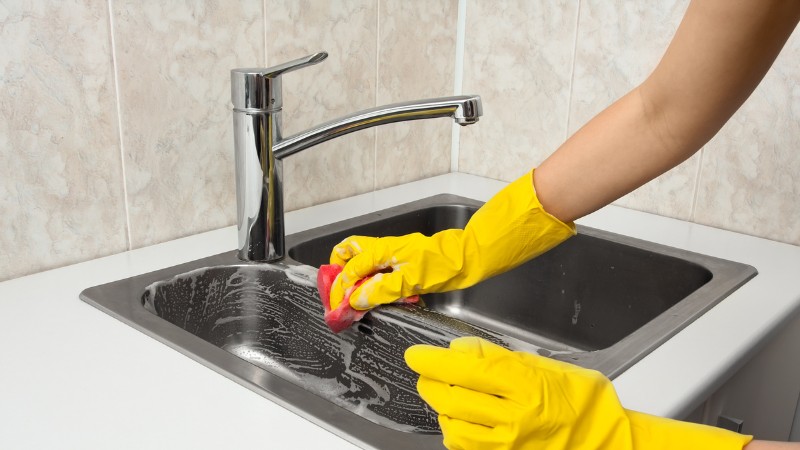
Disinfecting your kitchen sink involves a few simple steps. First, clear away any dishes or debris. Then, scrub the sink with hot, soapy water. Rinse thoroughly, and apply a disinfectant spray. Let it sit for a few minutes, then rinse again.
Finally, dry with a clean cloth.
Applying The Cleaner
Use a gentle cleanerfor the sink. Apply cleaner to dirty spots. Let it sit for a few minutes. This helps break down grime. Use gloves to protect your hands. Avoid harsh chemicals for safety.
Scrubbing Techniques
Use a sponge or brush for scrubbing. Scrub in small circles for best results. Focus on areas with stains. Use some elbow grease for stubborn spots. Rinse the sponge often. This keeps it clean and effective.
Rinsing And Drying
Rinse the sink with warm water. Ensure all cleaner is washed away. Dry with a soft cloth. This prevents water spots. Make sure the sink is completely dry. Check for any missed spots.
Maintaining A Germ-free Sink
Regular cleaning keeps your kitchen sink germ-free. Use a mix of vinegar and baking soda for effective disinfecting. Scrub with a brush, rinse thoroughly, and wipe dry for best results.
Regular Cleaning Schedule
Clean the sink every day. Use warm water and soap. Scrub gently with a sponge. Rinse thoroughly to remove soap. Dry with a clean cloth. Weekly, deep clean with vinegar. Pour vinegar into the sink. Let it sit for 10 minutes. Rinse with warm water. This kills germs and removes odors.
Daily Habits To Adopt
Wash dishes right after use. Don’t let them pile up. Wipe spills immediately with a cloth. Keep the sink clear. Use a strainer to catch food bits. Empty the strainer often. Rinse the sink after each use. This keeps it fresh and clean.
Common Mistakes To Avoid
Many people use too much cleaner in the sink. This can cause residue and waste. Always follow the instructions on the cleaner bottle.
Some forget to rinse the sink after cleaning. Rinsing removes leftover cleaner and dirt. It keeps the sink safe for food.
Not drying the sink can lead to water spots. Use a clean cloth to dry it well. This helps in avoiding bacteria growth.
Avoid mixing different cleaners. It can cause harmful fumes. Always use one cleaner at a time for safety.
Ignoring the faucet and handles is common. These areas collect germs too. Clean them regularly to keep the whole sink area healthy.
Credit: www.rd.com
Frequently Asked Questions
How Often Should I Disinfect My Kitchen Sink?
It’s recommended to disinfect your kitchen sink at least once a week. Regular cleaning helps prevent bacteria buildup and maintains hygiene. If you use the sink for raw meat or unwashed produce, consider disinfecting it more frequently to ensure safety and cleanliness in your kitchen environment.
What Is The Best Disinfectant For Kitchen Sinks?
White vinegar and baking soda are effective natural disinfectants for kitchen sinks. Mix equal parts and scrub the sink thoroughly. Alternatively, use a commercial disinfectant cleaner designed for kitchen surfaces. Always follow the instructions for best results and ensure the sink is rinsed well after cleaning.
Can I Use Bleach To Disinfect My Sink?
Yes, bleach is a powerful disinfectant for kitchen sinks. Mix one tablespoon of bleach with one gallon of water. Wipe down the sink surfaces with the solution. Rinse thoroughly with water to remove any bleach residue. Ensure proper ventilation when using bleach to prevent inhaling fumes.
Is It Safe To Use Natural Cleaners On Sinks?
Natural cleaners like vinegar and baking soda are safe for most kitchen sinks. They effectively remove bacteria and odors. However, avoid using acidic substances on certain materials, such as marble or stone sinks, as they can cause damage. Always test a small area first if unsure about compatibility.
Conclusion
Disinfecting your kitchen sink is crucial for a healthy home. Regular cleaning prevents germs from spreading. Start with basic soap and water. Use vinegar or baking soda for tough stains. Don’t forget the faucet and handles. They collect germs too.
Routine maintenance keeps your kitchen safe and fresh. A clean sink means a healthier family. It’s simple and effective. Follow these steps for a spotless kitchen. Enjoy a germ-free cooking space every day. Stay consistent, and your kitchen will thank you.
Now, put these tips into practice and maintain a sparkling kitchen sink!