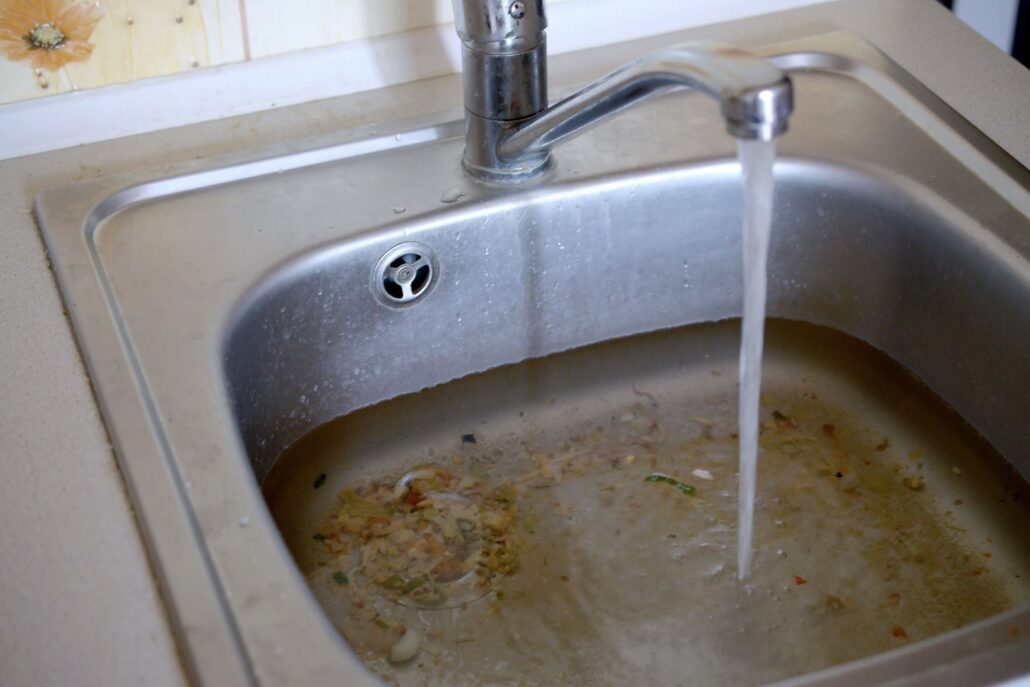
Picture this: you’re in the middle of preparing a delicious meal, and suddenly, water refuses to drain from your kitchen sink. It’s frustrating, right?
A blocked kitchen sink can disrupt your daily routine and put a damper on your culinary creativity. But what if I told you that fixing it doesn’t have to be a daunting task? With the right guidance, you can easily restore your sink to its former glory and avoid the stress of calling in a professional.
In this guide, we’ll walk you through simple, effective steps to tackle that stubborn clog. You’ll discover practical solutions that save you time, money, and a headache. So, roll up your sleeves and let’s dive into the world of sink unclogging—your kitchen’s harmony awaits!
Credit: www.narrowpathplumbing.com
Identifying The Cause
Food scraps often get stuck in the sink. Grease can harden and block pipes. Hair and soap scum are also common culprits. Small objects like spoons can fall and cause problems. Blockages can build up over time. Regular cleaning can help prevent clogs.
Water drains very slowly when there is a serious clog. Bad smells come from the sink. Bubbling sounds might be heard in the pipes. Sometimes, water backs up in the sink. If these signs appear, the clog might be deep. A plumber may be needed to fix it.
Initial Steps To Unblock
Start by checking the sink for visible debris. Use your hands or a tool to remove it. Be careful not to push debris further down. This can make the blockage worse. Once removed, rinse the area with clean water.
Heat some water until it boils. Pour the boiling waterdown the sink slowly. This helps clear any remaining grease or soap scum. Wait a few minutes and repeat if needed. Avoid pouring all at once to prevent splashing.
Using Household Solutions
Unclog a blocked kitchen sink using simple household solutions. Mix baking soda and vinegar, then pour down the drain. Rinse with hot water to clear the blockage.
Baking Soda And Vinegar
Baking sodaand vinegar work well together. Pour baking soda into the sink drain. Use about half a cup. Next, pour vinegar. Use one cup. These two will fizz and bubble. Wait for ten minutes. The fizz helps clean the drain. After the fizz stops, flush with hot water. This clears the sink.
Salt And Hot Water
Saltcan help too. Pour salt into the blocked drain. Use about half a cup. Then, boil water. Pour the hot water into the drain. The hot water melts grease. Salt scrubs away dirt. Wait for a few minutes. The blockage should clear.
Plunger Techniques
Using a plunger can effectively clear a blocked kitchen sink. Ensure the plunger covers the drain completely, creating a tight seal. Push down and pull up quickly to dislodge debris, repeating if necessary.
Choosing The Right Plunger
Selecting the correct plunger is important. Cup plungers are common. They work well for flat surfaces. Flange plungers are better for sinks. They have a rubber flap. This flap helps create a seal. Accordion plungers are powerful. They need more strength to use.
Effective Plunging Tips
Start with water in the sink. It helps the plunger seal. Press down firmly with the plunger. Pull up quickly. Repeat several times. This builds pressure. Check the sink after each plunge. Remove debris if the water drains slowly. Use caution to avoid splashing.
Chemical Drain Cleaners
Chemical drain cleaners can effectively clear blockages in kitchen sinks by dissolving grease and debris. Always follow instructions carefully to ensure safe use and avoid damaging pipes. Regular maintenance can prevent future clogs and keep your kitchen sink functioning smoothly.
When To Use Chemicals
Use chemical cleaners for serious blockages. They work fast and clear clogs. Grease, hair, and food waste often cause blockages. Chemicals dissolve these quickly. Always follow the product instructions. Don’t mix different cleaners. This can be dangerous. Use chemicals only if water isn’t draining at all. If water drains slowly, try other methods first.
Safety Precautions
Wear gloves and safety glasses when using chemicals. They protect your skin and eyes. Always work in a well-ventilated area. Keep children and pets away while you work. Never inhale the fumes directly. Avoid splashing the cleaner. Pour it slowly down the drain. If the cleaner touches your skin, wash immediately. Store chemicals safely after use.

Credit: www.popularmechanics.com
Removing The P-trap
- Bucket
- Wrench
- Gloves
- Old Towel
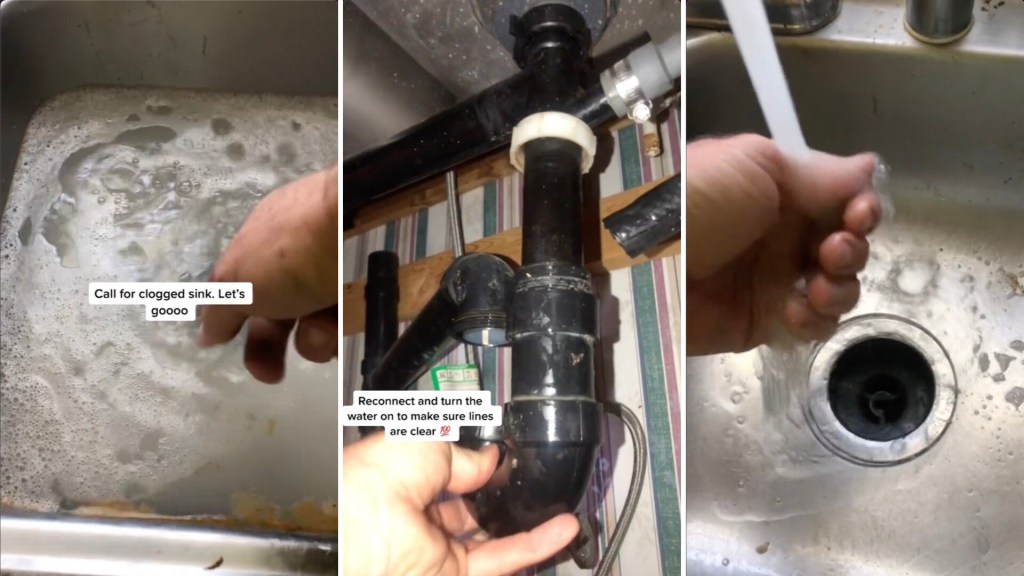
Place a bucket under the sink. This catches any water spills. Wear gloves to keep your hands clean. Use a wrench to loosen the P-Trap nuts. Turn the nuts slowly. This prevents damage to the pipes.
Once loose, carefully remove the P-Trap. Let the water drain into the bucket. Check the trap for blockages. Remove any debris found inside. Wash the trap with clean water. Reattach the P-Trap using the wrench. Make sure the nuts are tight.
Test the sink for leaks. Run water for a few minutes. Check under the sink. Ensure no water drips from the connections. If there are leaks, tighten the nuts again.
Using A Drain Snake
Drain snakes come in different types. The basic one is the handheld snake. It’s perfect for minor clogs. Another type is the electric snake. This is for serious blockages. There’s also a drum auger. It’s more powerful than a handheld snake. Each type has its own use. Choose based on your sink’s problem.
Start with inserting the snake into the drain. Turn the handle gently. Feel for resistance. This means you’ve hit the blockage. Twist and push the snake further. It helps break the clog. Pull out the snake slowly. Check if the blockage is gone. Repeat if needed. Always clean the snake after use. This keeps it ready for next time.
Credit: www.thecooldown.com
Preventing Future Blockages
Regularly clean your sink to prevent future blockages. Dispose of grease and food scraps in the trash. Use a sink strainer to catch debris and keep the drain clear.
Regular Maintenance Tips
Regular maintenancecan keep your sink running smooth. Pour hot water down the sink weekly. This helps remove grease and dirt. Use a mixture of baking soda and vinegar. This can clear small clogs. Avoid putting large food pieces in the sink. Use a sink strainer to catch them. Clean the strainer daily to prevent clogs. Check pipes for leaks or rust. Fix them quickly to avoid big problems.
Safe Disposal Practices
Proper disposal of waste keeps sinks clear. Avoid pouring oil or grease down the sink. These can harden and block pipes. Dispose of them in a waste bin. Scrape food scraps into the trash before washing dishes. Compost vegetable peels instead of washing them down. Teach family about safe disposal. This ensures everyone helps keep the sink clear.
When To Call A Professional
Water drains slowly, even after cleaning the sink. Unusual noises come from pipes. Bad smells linger, no matter how often you clean. These could mean big problems. A blocked sinkmight need expert help.
Water leaks under the sink. This may damage cabinets or floors. Mold grows, causing health risks. Fixing these needs special tools and skills. Professional plumbersknow how to deal with such issues.
Check plumber reviews online. Good reviews mean they’re reliable. Ask friends for recommendations. They might know a trusted plumber. Make sure they have a license. Licensed plumbers are trained and skilled.
Compare prices from different plumbers. Choose one who fits your budget. Ask about their experience. Experienced plumbers handle complex issues better. Look for one who offers a warranty. Warranty means they stand by their work.
Frequently Asked Questions
How Do I Unclog A Kitchen Sink Naturally?
You can unclog a kitchen sink naturally using baking soda and vinegar. Pour half a cup of baking soda down the drain. Follow it with half a cup of vinegar. Let it fizz for 15 minutes. Rinse with hot water to clear the blockage.
What Tools Can Clear A Blocked Sink?
A plunger, plumber’s snake, or drain auger can clear blockages. A plunger uses suction to dislodge debris. A plumber’s snake reaches deeper clogs. A drain auger twists through tough obstructions. These tools are effective for most kitchen sink clogs.
Why Is My Kitchen Sink Draining Slowly?
A slow-draining sink is often due to grease or food buildup. Hair, soap scum, or mineral deposits can also cause slow drainage. Regular cleaning and avoiding dumping grease down the drain can prevent slow drainage.
Can Chemical Cleaners Damage Pipes?
Yes, chemical cleaners can damage pipes over time. They’re effective but corrosive. Frequent use can weaken pipes and lead to leaks. Consider using natural methods or mechanical tools for safer drain clearing.
Conclusion
A blocked kitchen sink can be a hassle. Quick fixes are often simple. Start with checking the drain. Remove visible debris with gloves or tools. Baking soda and vinegar can help break down clogs. For stubborn blockages, a plunger might be needed.
Be patient and repeat if necessary. Regular maintenance prevents future issues. Keep sink clear of food scraps. Dispose of grease properly. Use drain strainers to catch debris. A clean sink is a happy sink. Remember, a little care saves you trouble.
Enjoy your clog-free kitchen sink!