Are you planning to replace your kitchen faucet but unsure how to get the right size? Measuring a kitchen faucet might seem tricky, but it’s easier than you think.
Knowing the exact measurements will save you time, money, and frustration when shopping for a new one. In this guide, you’ll learn simple steps to measure your faucet accurately, so you can choose the perfect fit for your kitchen. Keep reading, and you’ll be confident in making the best choice for your space.
Tools Needed
Measuring a kitchen faucet needs a few simple tools. A measuring tapehelps measure long parts like the faucet height or spout reach. It is flexible and easy to use around curves.
A ruleris good for short, straight measurements. Use it for small parts like the faucet base or handle width. It gives quick and clear results.
A caliperis useful for precise measurements. It measures thickness, diameter, or small gaps accurately. It is perfect for fittings and connections.
- Measuring tape: For long or curved parts.
- Ruler: For short, straight parts.
- Caliper: For detailed, exact measurements.
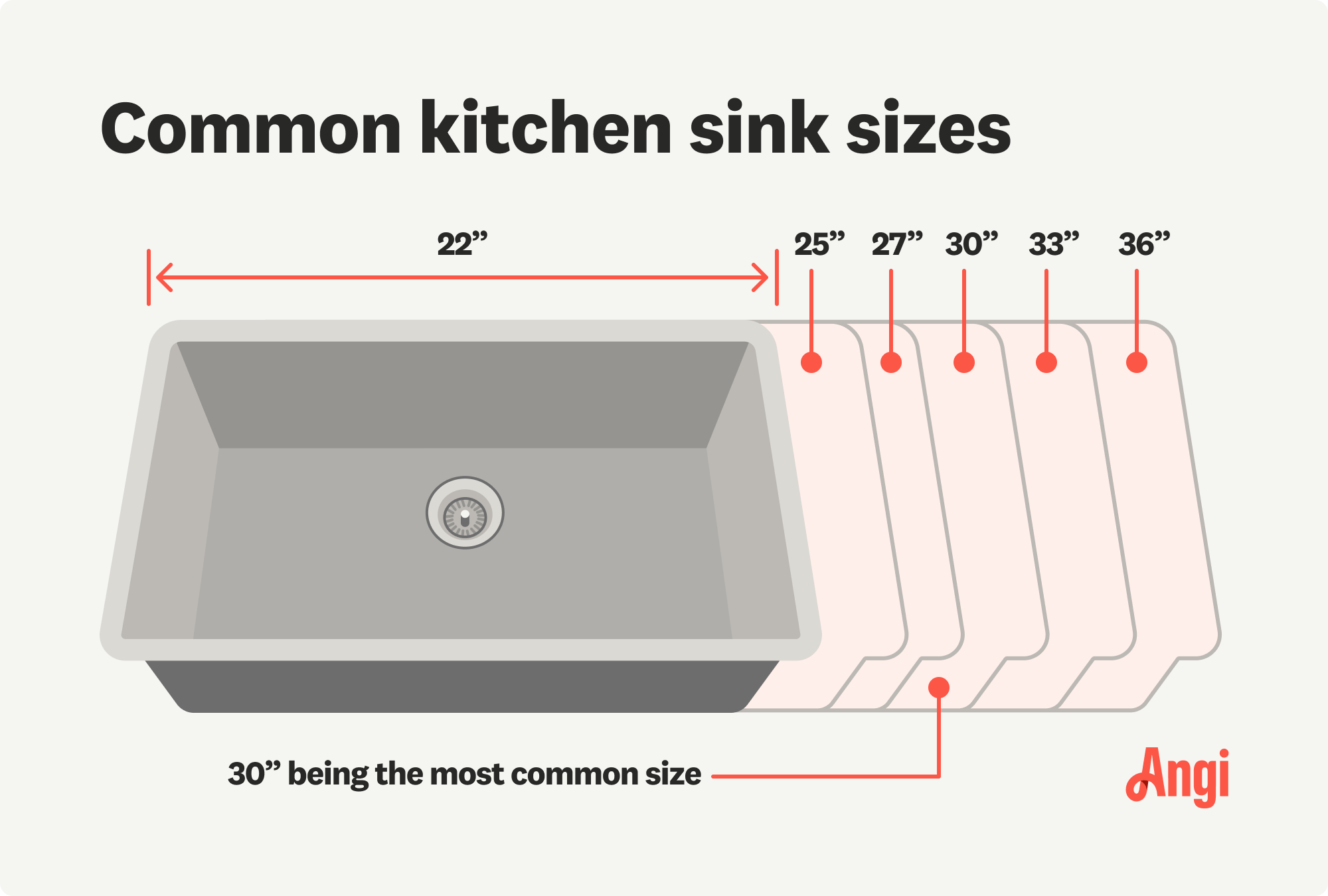
Credit: www.angi.com
Identify Faucet Parts
The spout heightis the distance from the base of the faucet to the highest point of the spout. This helps to know how tall the faucet will stand above the sink.
Spout reachmeasures how far the spout extends over the sink. It is the distance from the center of the faucet base to the spout’s tip. This affects how water flows into the sink bowl.
Handle sizeis the length or width of the faucet handle. It controls how easy it is to turn the water on and off. Handles that are too small or too big may be hard to use.
Measure Spout Height
Measure the spout heightby starting at the base of the faucet. This is where it attaches to the sink or countertop. Measure straight up to the highest point of the spout. This gives the total height.
Keep in mind the sink depth. If your sink is very deep, a taller spout might be better. It helps fill large pots and wash dishes easily.
- Use a tape measure or ruler for accuracy.
- Measure in inches or centimeters, based on your preference.
- Note the height to compare with new faucets.
- Check that the spout height fits your kitchen tasks.
Measure Spout Reach
Measure the distance from the center of the faucet baseto the end of the spout. This is called the spout reach. It shows how far the water will flow into the sink.
Check for any obstructionslike walls or cabinets near the spout. These can stop the water or make the faucet hard to use. Make sure there is enough space for comfortable use.
Measure Faucet Base
Check the size of the hole in the sink. It is called the mounting hole. Use a ruler to measure across the hole. This gives the diameter. The hole size is important for choosing the right faucet. Most holes are around 1.25 to 1.5 inches wide. Make sure to measure carefully.
Look at how many holes are in the sink. Some sinks have one hole, while others have more. Count them carefully. The number of holes affects the type of faucet you need. If there is one hole, you need a single-hole faucet. If there are three holes, you need a faucet with a deck plate. Always match the faucet to the sink’s holes.
Check Handle Dimensions
Measure the handle lengthfrom the base to the tip. This helps to know how much space the handle needs.
Check the handle clearance, the space between the handle and any wall or backsplash. This ensures the handle moves freely without hitting anything.
- Use a tape measure for accuracy.
- Note the length in inches or centimeters.
- Measure clearance by opening the handle fully and checking the gap.
Record Measurements Accurately
Always use the same units for all measurements, either inches or centimeters. This keeps everything clear and avoids confusion. Use a tape measure or ruler that shows these units clearly. Write down every number carefully. Double-check each measurement by measuring twice or more. This helps catch any mistakes early. Accurate numbers are key for a perfect fit. Keep your notes neat and organized. This makes it easy to compare later. Don’t rush the process; take your time. Precision matters most here.
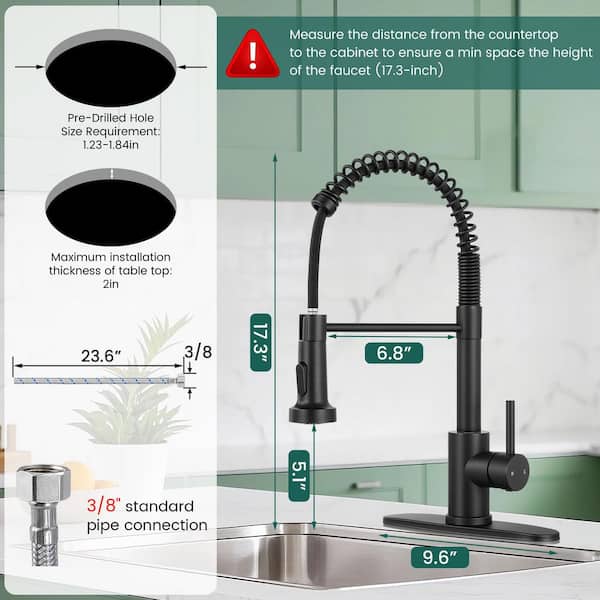
Credit: www.homedepot.com
Compare Measurements For Replacement
Check the mounting styleof your current faucet. It might be single-hole, centerset, or widespread. The new faucet must fit the same style to avoid extra drilling or repairs.
Measure the distance between holes for a multiple-holefaucet. This helps find a perfect match for your sink or countertop.
| Mounting Style | Hole Count | Typical Distance Between Holes |
|---|---|---|
| Single-hole | 1 | Not applicable |
| Centerset | 3 | 4 inches |
| Widespread | 3 | 8 inches or more |
Measure the water supply linesunder your sink. Length and type matter to connect easily. Standard lines are usually 3/8 inch compression fittings.
- Note the length of the current supply lines.
- Check if flexible or rigid lines are used.
- Match new lines to avoid leaks or extra work.
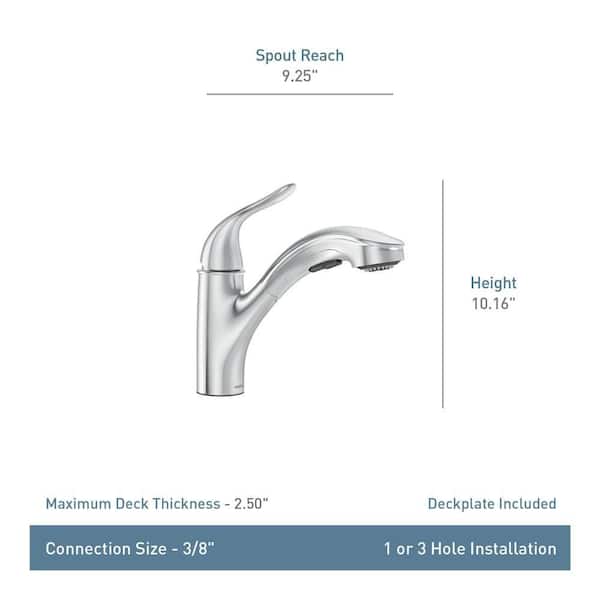
Credit: www.homedepot.com
Frequently Asked Questions
How Do I Measure The Height Of A Kitchen Faucet?
Measure from the base where the faucet mounts to the highest point. This ensures it fits under cabinets or shelves.
What Is The Standard Faucet Spout Reach?
The spout reach usually ranges from 8 to 10 inches. Measure from the base center to where water flows.
How To Measure Faucet Mounting Holes?
Count and measure the distance between mounting holes on your sink or countertop. This helps find a compatible faucet.
Why Measure Faucet Base Diameter?
Knowing the base diameter ensures the faucet fits the sink hole properly. Measure across the widest part of the base.
Conclusion
Measuring a kitchen faucet is easier than you think. Start by noting the height, reach, and number of holes. These simple steps help you find the right fit for your sink. Taking careful measurements saves time and avoids mistakes. A well-measured faucet improves your kitchen’s look and function.
Keep your tape measure handy and follow the steps closely. Soon, you will have the perfect faucet for your kitchen space. Simple, clear, and smart measuring makes all the difference.