Lighting can completely transform the look and feel of your kitchen and dining areas. But how do you make sure your kitchen and dining lights work well together?
If you’ve ever struggled to create a balanced and inviting space, you’re not alone. The right pairing of lights can highlight your best features, set the perfect mood, and even make your meals more enjoyable. You’ll discover simple, practical tips to choose and match kitchen and dining lights that complement each other perfectly.
Keep reading—you’re just a few steps away from lighting that makes your home shine.

Credit: www.1800lighting.com
Choosing The Right Style
Choosing the right style for kitchen and dining lights helps create a harmonious look. Matching design themes keep spaces connected and balanced. For example, a modern kitchenpairs well with sleek, simple lights. A traditional dining roomsuits classic chandeliers or lanterns.
Mixing modern and traditional lights can add visual interest. Use one style as the main theme, and add small touches of the other. This way, the room feels unique yet coherent.
Fixture finishes also play a key role. Choose finishes that complement each otheracross the kitchen and dining areas. Popular finishes include:
- Brushed nickel
- Matte black
- Antique brass
- Polished chrome
Keeping finishes consistent or in the same color family helps tie the spaces together. It creates a clean, polished appearance.
Credit: modernize.com
Balancing Light Intensity
Ambient lightinggives a soft, general glow to the kitchen and dining area. It sets the mood and fills the room with even light. Task lightingis brighter and focused. It helps with cooking, reading menus, or eating. Balancing these two types is key to a comfy space.
Adjusting brightness lets you change the light based on time or activity. Bright lights work well for cooking. Dimmer lights create a calm, cozy dining mood.
- Use dimmers to control light smoothly.
- Match light levels between kitchen and dining areas.
- Dim task lights for less glare when eating.
- Keep ambient lights bright enough for safe movement.
Coordinating Colors And Materials
Harmonizing color palettesin kitchen and dining lights creates a smooth look. Choose colors that match or complementeach other. Soft tones like beige, white, or gray work well for both spaces. Bright colors can add fun but keep them balanced. For example, a blue kitchen light with a soft blue dining lamp looks nice. Avoid clashing colors that can distract the eye.
Selecting complementary materialshelps tie the room together. Use similar finishes for both areas. Metal, wood, and glass are popular choices. A matte black metal fixturein the kitchen pairs well with a dining light of the same material. Wood tones should be close in shade to blend easily. Mixing materials is okay if they share a common color or texture.
Placement Tips For Function And Style
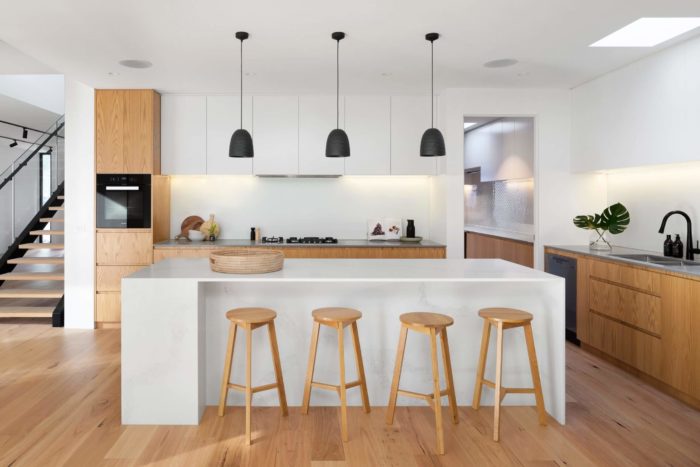
Lights should hang at the right heightto be useful and pretty. Over a dining table, lights should be about 30 to 36 inchesabove the surface. In the kitchen, lights over an island or counter should be 32 to 34 incheshigh. This helps avoid glare and shadows while giving a cozy feel.
Space between lights matters too. For pendant lights, keep about 24 to 30 inchesapart for balance. This makes sure each light shines well without crowding. For rows of lights, measure the length and divide the space evenly.
Focal pointsare key in both kitchen and dining rooms. Lights should highlight these spots:
- Dining table center
- Kitchen island or workspace
- Decorative features like a painting or shelf
Using lights to draw attention helps the room feel organizedand welcoming. Proper placement blends functionwith style.
Incorporating Layered Lighting
Pendant lightshang down and create a focal point over the dining table. They add style and direct light for meals and talks. Recessed lightsare built into the ceiling, offering soft, even light. They fill the room without taking space or attention.
Combining these two types gives layered lighting. This means bright light for tasks and soft light for mood. It balances function and comfort.
- Accent lightinghighlights kitchen features like art or shelves.
- Under-cabinet lightsbrighten counters for cooking and prep.
- They add warmth and reduce shadows in work areas.

Credit: www.hgtv.com
Enhancing Ambiance With Light Temperature
Warm lightingcreates a cozy and inviting feel. It works well in dining areas to make meals feel special and relaxing. Warm light usually has a yellow or soft orange glow. Cool lightinggives a clean and bright look, good for kitchens where tasks need clear visibility. It often has a white or blue tint.
Choosing the right bulb color helps set the mood. Bulbs come in different color temperaturesmeasured in Kelvins (K). Lower numbers (2700K-3000K) mean warm light. Higher numbers (4000K-5000K) mean cool light.
| Light Type | Color Temperature (Kelvin) | Best For |
|---|---|---|
| Warm Light | 2700K – 3000K | Dining rooms, cozy spaces |
| Cool Light | 4000K – 5000K | Kitchens, work areas |
Practical Considerations
Consider the room’s size and ceiling height when pairing kitchen and dining lights. Choose fixtures that complement each other in style and finish. Ensure adequate lighting for both meal prep and dining ambiance.
Energy Efficiency Tips
Choose lights that save energy. LED bulbs use less power. They last longer too. This means fewer replacements. Less waste and more savings. Think about dimmer switches. They let you control light levels. Use less energy when you need less light. Turn off lights when not in use. This helps save even more energy. Natural light is also great. Use windows for daylight when possible.
Maintenance And Durability
Pick lights that are easy to clean. Dust can make them dim. Clean lights shine brighter. Choose strong materials. Metals and hard plastics last long. They don’t break easily. Consider lights that are easy to replace. Parts should be simple to find. This helps in quick fixes. A durable light means fewer problems. It saves money over time.
Frequently Asked Questions
How Do I Match Kitchen And Dining Light Styles?
Choose lighting fixtures with similar materials or finishes. Coordinate colors and shapes to create a cohesive look. Balance modern and traditional styles for harmony.
What Lighting Colors Suit Both Kitchen And Dining Areas?
Warm white lights (2700K-3000K) create a cozy, inviting atmosphere. Use consistent color temperature for smooth transition between spaces.
Can I Use The Same Light Fixture In Kitchen And Dining?
Yes, if the fixture fits both spaces’ size and style. It saves cost and ensures design continuity.
How To Balance Task And Ambient Lighting Together?
Use bright task lights for cooking and softer ambient lights for dining. Layer lighting to enhance function and mood.
Conclusion
Choosing the right kitchen and dining lights creates a warm, inviting space. Match styles and colors to keep the look balanced. Think about light brightness and placement for comfort and function. Mixing different types of lights adds depth and interest.
Small changes can make a big difference in your room’s feel. Take your time and enjoy the process. Your perfect lighting setup awaits.